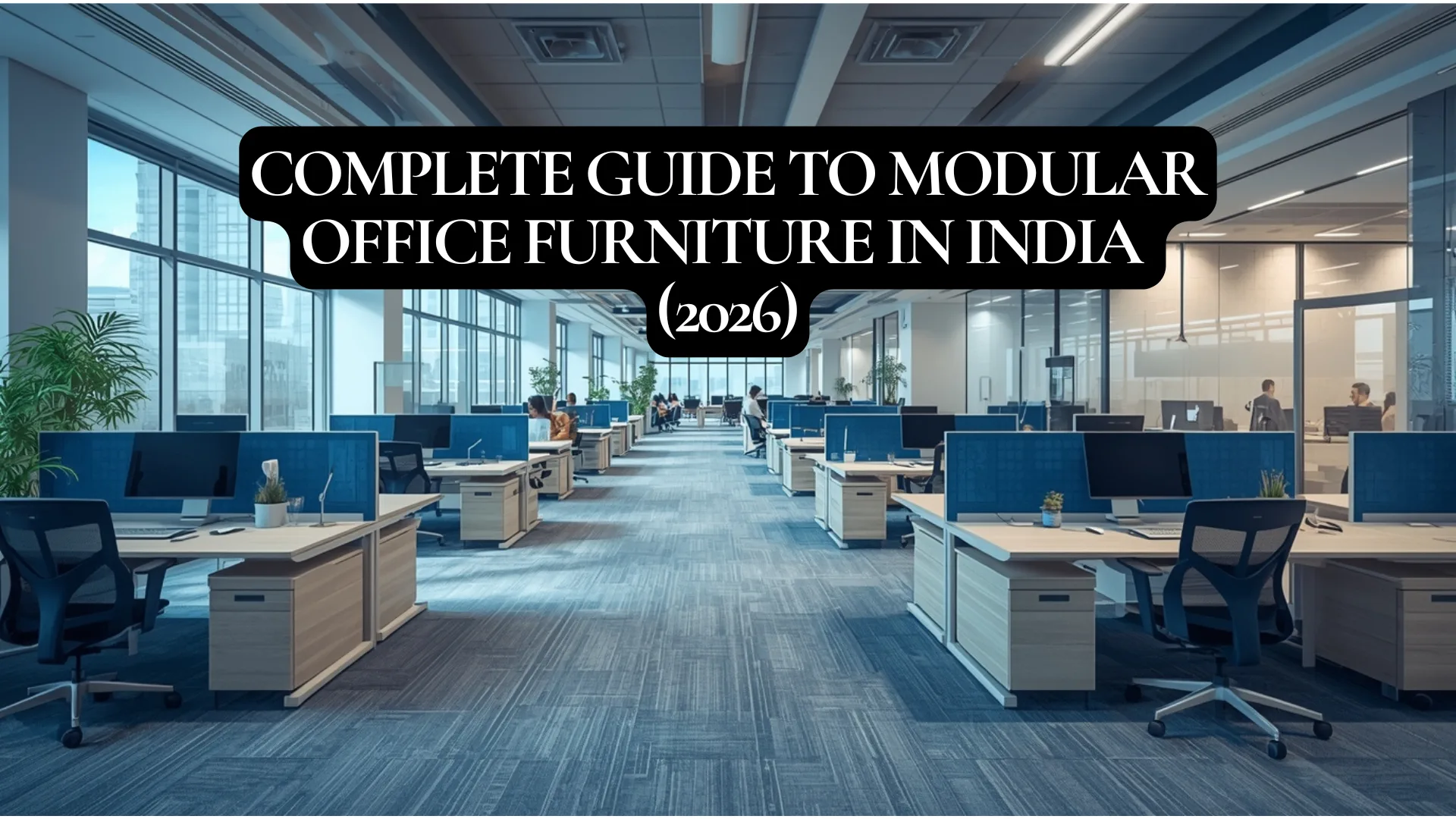


Benefits of Modular Office Furniture
What Is Modular Office Furniture? Walk into any modern office today, and you’ll likely notice something different from the rigid cubicles of the past. Desks move, partitions shift, and entire workstations seem to adapt effortlessly. That’s the magic of modular office furniture—a concept that has quietly transformed how we think about workspaces. At its core, modular office furniture consists of independent, interchangeable units that can be combined, rearranged, or expanded based on need. Instead of committing to a fixed layout, businesses can mix and match components like desks, storage units, partitions, and seating arrangements. Think of it like building blocks for your office—each piece fits into a larger system but can stand on its own when needed. This flexibility is what makes modular furniture so appealing in today’s fast-paced business world. Companies no longer operate in static environments. Teams grow, projects shift, and priorities evolve. Traditional furniture often struggles to keep up, forcing costly redesigns or replacements. Modular setups, on the other hand, are designed to evolve alongside the organization. Another key aspect is scalability. Whether you’re a startup working out of a small shared space or a large corporation expanding across multiple floors, modular furniture allows you to scale your workspace without starting from scratch. You simply add, remove, or rearrange components as needed. What makes this approach even more compelling is how it aligns with modern work culture. With remote work, hybrid schedules, and collaborative environments becoming the norm, offices need to be as dynamic as the people who use them. Modular furniture isn’t just a design trend—it’s a practical response to how work actually happens today. Evolution of Modern Workspaces Not too long ago, offices were defined by uniformity—rows of identical desks, fixed cubicles, and little room for personalization. It was efficient, sure, but not exactly inspiring. Over time, businesses began to realize that workspace design directly impacts productivity, creativity, and employee satisfaction. The shift began with open-plan offices, which aimed to break down barriers and encourage communication. While this approach had its benefits, it also introduced new challenges like noise and lack of privacy. This is where modular office furniture stepped in as a smarter solution—offering the best of both worlds. Modern workspaces are now designed with agility in mind. Companies need environments that can quickly adapt to different tasks, from focused individual work to collaborative brainstorming sessions. Modular furniture supports this by allowing spaces to transform on demand. Need a quiet corner for deep work? Add partitions. Hosting a team meeting? Rearrange desks into a collaborative cluster. Technology has also played a major role in this evolution. With laptops replacing desktops and cloud-based tools enabling remote collaboration, the need for fixed workstations has diminished. Employees are no longer tied to one spot, and furniture has had to follow suit. Modular systems accommodate this mobility, offering flexible seating and shared workspaces. There’s also a cultural shift at play. Today’s workforce values comfort, autonomy, and personalization. Employees want to feel connected to their environment, not confined by it. Modular furniture empowers them to shape their workspace in ways that suit their preferences and work styles. In many ways, the rise of modular office furniture reflects a broader transformation in how we view work itself. It’s no longer about fitting people into predefined spaces—it’s about designing spaces that adapt to people. And that subtle shift makes all the difference. Flexibility and Adaptability Easy Reconfiguration for Changing Needs Imagine trying to rearrange a traditional office. Heavy desks, fixed wiring, and immovable partitions turn what should be a simple change into a logistical headache. Now contrast that with a modular setup, where reconfiguration is not just possible-it’s effortless. One of the standout benefits of modular office furniture is its ability to adapt quickly to changing business needs. Whether you’re onboarding new employees, restructuring teams, or launching a new project, modular systems allow you to reorganize your workspace without major disruptions. It’s like having a workspace that evolves in real time alongside your organization. This adaptability is particularly valuable in industries where change is constant. Startups, for example, often experience rapid growth and shifting priorities. With modular furniture, they can expand their office layout incrementally instead of committing to a fixed design that may become obsolete within months. Even in more stable environments, flexibility remains a huge advantage. Departments may need to collaborate more closely for certain projects, requiring temporary shared spaces. With modular setups, you can create these environments on demand and then revert to the original layout once the project is complete. Another overlooked benefit is how this flexibility reduces downtime. Traditional office renovations can take days or even weeks, disrupting workflow and productivity. Modular reconfigurations, however, can often be completed in a matter of hours. That means less interruption and more continuity in daily operations. Ultimately, the ability to reconfigure your workspace easily isn’t just about convenience-it’s about staying agile in a competitive landscape. Businesses that can adapt quickly are better positioned to seize opportunities, respond to challenges, and maintain a productive workforce. Supporting Hybrid Work Models The way people work has changed dramatically in recent years, with hybrid work models becoming the new standard. Employees split their time between home and the office, which means traditional desk assignments often no longer make sense. This is where modular office furniture truly shines. In a hybrid setup, not every employee needs a dedicated desk at all times. Modular furniture supports concepts like hot-desking and shared workstations, allowing multiple employees to use the same space at different times. This not only optimizes space but also reduces overhead costs for businesses. Flexibility also plays a crucial role in accommodating different work styles. Some employees come into the office for collaboration, while others need a quiet space to focus. Modular furniture allows organizations to create zones tailored to specific activities—from open collaboration areas to private work pods. Another advantage is the ease of scaling up or down. As companies adjust their hybrid policies, they may need to increase or decrease office
Benefits of Modular Office Furniture Read More »