What Is Modular Office Furniture?
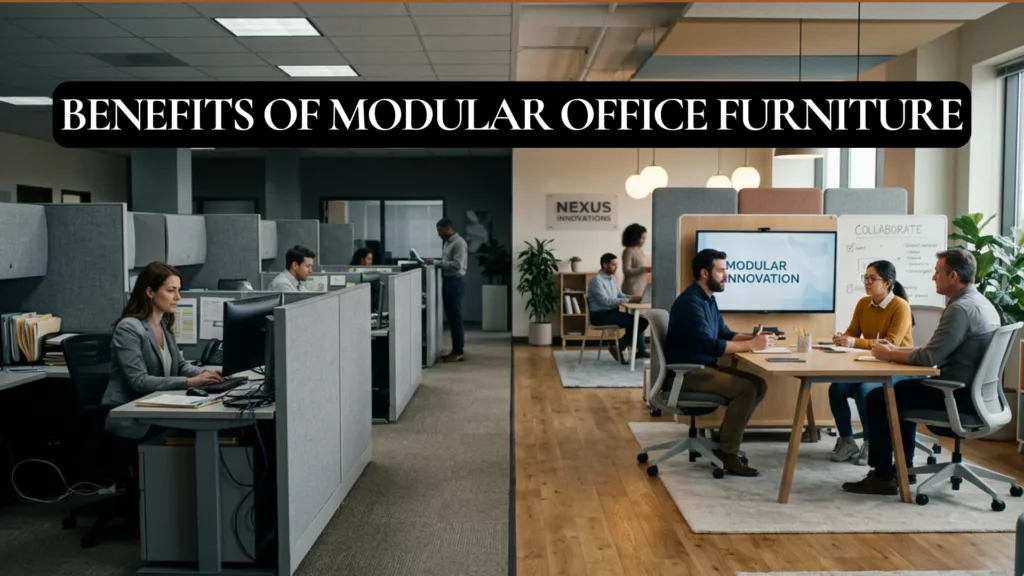
Walk into any modern office today, and you’ll likely notice something different from the rigid cubicles of the past. Desks move, partitions shift, and entire workstations seem to adapt effortlessly. That’s the magic of modular office furniture—a concept that has quietly transformed how we think about workspaces.
At its core, modular office furniture consists of independent, interchangeable units that can be combined, rearranged, or expanded based on need. Instead of committing to a fixed layout, businesses can mix and match components like desks, storage units, partitions, and seating arrangements. Think of it like building blocks for your office—each piece fits into a larger system but can stand on its own when needed.
This flexibility is what makes modular furniture so appealing in today’s fast-paced business world. Companies no longer operate in static environments. Teams grow, projects shift, and priorities evolve. Traditional furniture often struggles to keep up, forcing costly redesigns or replacements. Modular setups, on the other hand, are designed to evolve alongside the organization.
Another key aspect is scalability. Whether you’re a startup working out of a small shared space or a large corporation expanding across multiple floors, modular furniture allows you to scale your workspace without starting from scratch. You simply add, remove, or rearrange components as needed.
What makes this approach even more compelling is how it aligns with modern work culture. With remote work, hybrid schedules, and collaborative environments becoming the norm, offices need to be as dynamic as the people who use them. Modular furniture isn’t just a design trend—it’s a practical response to how work actually happens today.
Evolution of Modern Workspaces
Not too long ago, offices were defined by uniformity—rows of identical desks, fixed cubicles, and little room for personalization. It was efficient, sure, but not exactly inspiring. Over time, businesses began to realize that workspace design directly impacts productivity, creativity, and employee satisfaction.
The shift began with open-plan offices, which aimed to break down barriers and encourage communication. While this approach had its benefits, it also introduced new challenges like noise and lack of privacy. This is where modular office furniture stepped in as a smarter solution—offering the best of both worlds.
Modern workspaces are now designed with agility in mind. Companies need environments that can quickly adapt to different tasks, from focused individual work to collaborative brainstorming sessions. Modular furniture supports this by allowing spaces to transform on demand. Need a quiet corner for deep work? Add partitions. Hosting a team meeting? Rearrange desks into a collaborative cluster.
Technology has also played a major role in this evolution. With laptops replacing desktops and cloud-based tools enabling remote collaboration, the need for fixed workstations has diminished. Employees are no longer tied to one spot, and furniture has had to follow suit. Modular systems accommodate this mobility, offering flexible seating and shared workspaces.
There’s also a cultural shift at play. Today’s workforce values comfort, autonomy, and personalization. Employees want to feel connected to their environment, not confined by it. Modular furniture empowers them to shape their workspace in ways that suit their preferences and work styles.
In many ways, the rise of modular office furniture reflects a broader transformation in how we view work itself. It’s no longer about fitting people into predefined spaces—it’s about designing spaces that adapt to people. And that subtle shift makes all the difference.
Flexibility and Adaptability
Easy Reconfiguration for Changing Needs
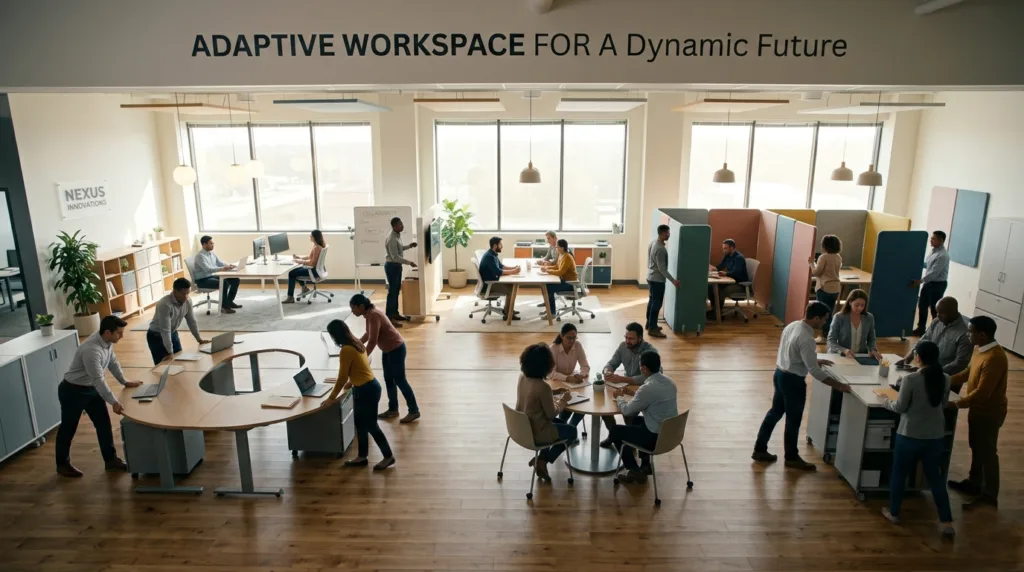
Imagine trying to rearrange a traditional office. Heavy desks, fixed wiring, and immovable partitions turn what should be a simple change into a logistical headache. Now contrast that with a modular setup, where reconfiguration is not just possible-it’s effortless.
One of the standout benefits of modular office furniture is its ability to adapt quickly to changing business needs. Whether you’re onboarding new employees, restructuring teams, or launching a new project, modular systems allow you to reorganize your workspace without major disruptions. It’s like having a workspace that evolves in real time alongside your organization.
This adaptability is particularly valuable in industries where change is constant. Startups, for example, often experience rapid growth and shifting priorities. With modular furniture, they can expand their office layout incrementally instead of committing to a fixed design that may become obsolete within months.
Even in more stable environments, flexibility remains a huge advantage. Departments may need to collaborate more closely for certain projects, requiring temporary shared spaces. With modular setups, you can create these environments on demand and then revert to the original layout once the project is complete.
Another overlooked benefit is how this flexibility reduces downtime. Traditional office renovations can take days or even weeks, disrupting workflow and productivity. Modular reconfigurations, however, can often be completed in a matter of hours. That means less interruption and more continuity in daily operations.
Ultimately, the ability to reconfigure your workspace easily isn’t just about convenience-it’s about staying agile in a competitive landscape. Businesses that can adapt quickly are better positioned to seize opportunities, respond to challenges, and maintain a productive workforce.
Supporting Hybrid Work Models
The way people work has changed dramatically in recent years, with hybrid work models becoming the new standard. Employees split their time between home and the office, which means traditional desk assignments often no longer make sense. This is where modular office furniture truly shines.
In a hybrid setup, not every employee needs a dedicated desk at all times. Modular furniture supports concepts like hot-desking and shared workstations, allowing multiple employees to use the same space at different times. This not only optimizes space but also reduces overhead costs for businesses.
Flexibility also plays a crucial role in accommodating different work styles. Some employees come into the office for collaboration, while others need a quiet space to focus. Modular furniture allows organizations to create zones tailored to specific activities—from open collaboration areas to private work pods.
Another advantage is the ease of scaling up or down. As companies adjust their hybrid policies, they may need to increase or decrease office capacity. Modular systems make these transitions seamless, eliminating the need for costly renovations or new furniture purchases.
There’s also a psychological aspect to consider. Employees returning to the office want an environment that feels purposeful and engaging, not just a place to sit. Modular furniture helps create dynamic, inviting spaces that encourage interaction and productivity.
In essence, modular office furniture aligns perfectly with the demands of hybrid work. It provides the flexibility, efficiency, and adaptability needed to support a workforce that is no longer confined to a single location.
Cost-Effectiveness
Long-Term Investment Value
When businesses think about office furniture, the first instinct is often to focus on upfront costs. But here’s the reality—cheaper, traditional furniture can end up costing more over time. Modular office furniture flips that equation by offering a smarter, long-term investment that grows with your business instead of holding it back.
Think of it like buying a smartphone versus a landline. A landline might seem cheaper initially, but it quickly becomes limiting. A smartphone, on the other hand, evolves with your needs. Modular furniture works the same way. You’re not just buying desks and chairs—you’re investing in a flexible system that can adapt for years.
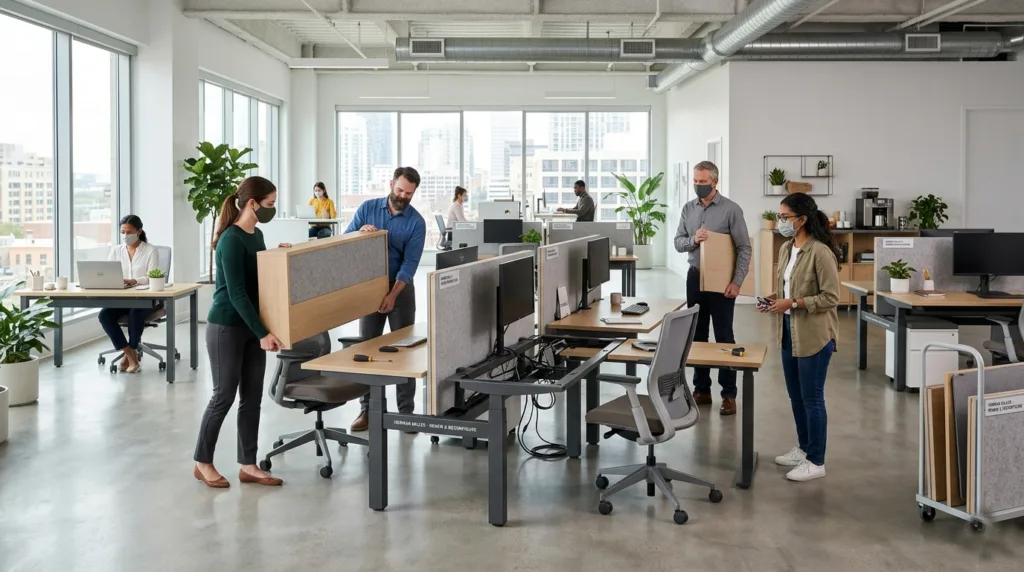
One of the biggest cost-saving factors is reusability. Instead of discarding entire furniture sets when your office layout changes, you can simply reconfigure existing components. Need more desks? Add modules. Downsizing? Remove and store unused pieces. This significantly reduces the need for frequent large-scale purchases.
There’s also a reduction in renovation expenses. Traditional office redesigns often involve construction work, which can be expensive and time-consuming. Modular furniture eliminates much of that need, allowing businesses to refresh their workspace without hiring contractors or halting operations.
According to workplace design studies, companies that invest in adaptable office solutions can reduce workspace-related costs by up to 20–30% over a five-year period. That’s not a small number—it’s a strategic advantage.
Another subtle benefit is future-proofing. Business needs are unpredictable. What works today might not work tomorrow. Modular furniture gives you the freedom to evolve without constantly reinvesting. Instead of reacting to change with new expenses, you’re already prepared for it.
Reduced Replacement Costs
Let’s be honest—office furniture takes a beating. Chairs wear out, desks get scratched, and storage units eventually lose their charm. With traditional furniture, replacing one damaged piece often means replacing an entire set just to maintain a consistent look. That’s both frustrating and expensive.
Modular office furniture changes that dynamic completely. Because it’s built from independent components, you can replace or upgrade individual parts without affecting the whole system. It’s like fixing a single tile instead of redoing the entire floor.
This targeted replacement approach dramatically lowers costs over time. If a desk surface gets damaged, you swap it out. If a partition becomes outdated, you upgrade just that section. You’re not locked into an all-or-nothing scenario.
Maintenance is also simpler and more affordable. Many modular systems are designed with standardized parts, making repairs quicker and less costly. You don’t need specialized solutions or hard-to-find replacements—everything is designed to be easily accessible and interchangeable.
There’s also a sustainability angle here. By replacing only what’s necessary, businesses generate less waste, which not only helps the environment but can also reduce disposal costs. It’s a win-win situation that aligns financial efficiency with responsible practices.
In the long run, modular furniture acts less like a consumable and more like a durable asset—one that continues to deliver value long after the initial investment.
Space Optimization
Maximizing Small Office Spaces
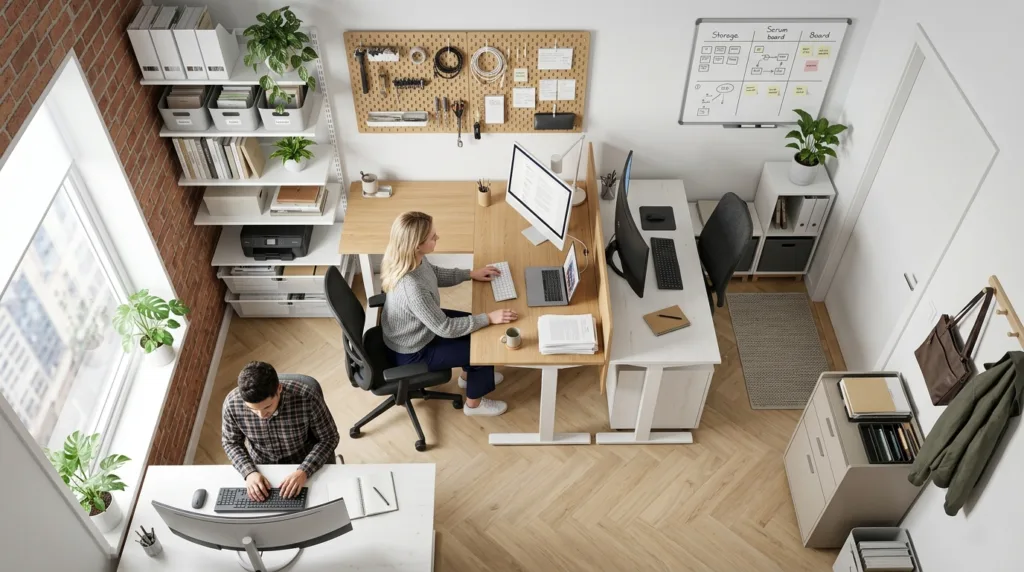
Space is one of the most expensive resources in any business. Whether you’re renting a small office or managing a large corporate floor, every square foot matters. Modular office furniture is designed with this reality in mind, helping you make the most out of limited space without feeling cramped.
Traditional furniture often comes with fixed dimensions and layouts, which can lead to wasted areas or inefficient use of space. Modular systems, however, are highly customizable, allowing you to tailor your layout to fit your exact needs. It’s like solving a puzzle where every piece fits perfectly.
For smaller offices, this is a game-changer. You can create multi-functional workstations that serve multiple purposes throughout the day. A desk can double as a meeting table, or a storage unit can act as a partition. This level of versatility ensures that no space goes unused.
Vertical space is another area where modular furniture excels. Many systems include stackable components and wall-mounted units, allowing you to expand upward instead of outward. This is especially useful in urban offices where floor space is limited but ceiling height is available.
There’s also the psychological impact of a well-organized space. Cluttered environments can feel overwhelming and reduce productivity. Modular furniture helps maintain a clean, structured layout, making the office feel larger and more inviting.
Ultimately, maximizing space isn’t just about fitting more furniture—it’s about creating an environment that supports efficiency and comfort. Modular systems make that possible without compromising on style or functionality.
Smart Storage Solutions
Storage is one of those things you don’t think about until you run out of it. Suddenly, papers pile up, desks become cluttered, and productivity takes a hit. Modular office furniture tackles this problem head-on with intelligent, adaptable storage solutions.
Instead of relying on bulky, standalone cabinets, modular systems integrate storage directly into the workspace. Think under-desk drawers, mobile storage units, and shelving that doubles as partitions. This seamless integration keeps everything within reach while maintaining a clean and organized look.
One of the standout features is mobility. Many modular storage units come with wheels, allowing you to move them around as needed. This flexibility is particularly useful in dynamic work environments where teams and projects frequently change.
Customization also plays a big role. Different businesses have different storage needs—some require space for physical files, while others need room for tech equipment. Modular systems allow you to configure storage based on your specific requirements, ensuring nothing is wasted.
There’s also a focus on accessibility. Poorly designed storage can slow down workflow, forcing employees to spend time searching for what they need. Modular solutions prioritize easy access and logical organization, helping teams work more efficiently.
In a way, smart storage is like having a well-organized kitchen. When everything is in its place, tasks become smoother and faster. Modular office furniture brings that same level of efficiency to the workplace.
Enhanced Collaboration

Encouraging Team Interaction
Collaboration doesn’t just happen—it’s influenced by the environment. A rigid office layout can quietly discourage interaction, while a flexible one can naturally bring people together. Modular office furniture plays a crucial role in shaping how teams communicate and collaborate.
One of its biggest strengths is the ability to create open, inviting spaces that encourage spontaneous conversations. Instead of being confined to isolated desks, employees can easily gather in shared areas designed for teamwork. These spaces act as hubs where ideas flow freely.
But it’s not just about openness. Effective collaboration also requires balance. Too much noise or distraction can be counterproductive. Modular systems allow businesses to design collaboration zones alongside quiet areas, giving employees the freedom to choose how they work.
Another advantage is the ease of reconfiguration for group activities. Need to host a brainstorming session? Rearrange desks into a circle. Working on a team project? Cluster workstations together. This adaptability makes collaboration feel natural rather than forced.
There’s also a cultural impact. When employees see that their workspace is designed to support interaction, it sends a message that collaboration is valued. This can lead to stronger team dynamics and improved morale.
In many ways, modular furniture acts as a silent facilitator—shaping how people connect without them even realizing it.
Creating Multi-Functional Areas
Modern offices are no longer just places to sit and work—they’re environments that support a wide range of activities. From meetings and presentations to relaxation and creative thinking, today’s workplaces need to do it all. Modular office furniture makes this possible by enabling multi-functional spaces.
Instead of dedicating separate rooms for every purpose, businesses can use modular setups to create spaces that adapt throughout the day. A conference area in the morning can become a collaborative workspace in the afternoon and a training zone by evening.
This flexibility is especially valuable for companies with limited space. By combining functions into a single area, you can maximize utility without expanding your footprint. It’s an efficient way to get more value out of your office.
Technology integration also enhances these multi-functional spaces. Modular furniture often includes features like cable management, power outlets, and mounting options for screens, making it easy to switch between different uses.
There’s also a creative element to consider. Dynamic spaces inspire dynamic thinking. When employees are not confined to a single type of environment, they’re more likely to approach problems from new perspectives.
In essence, multi-functional areas transform the office into a living, breathing space—one that evolves alongside the work being done.
Aesthetic Appeal and Branding
Customization Options
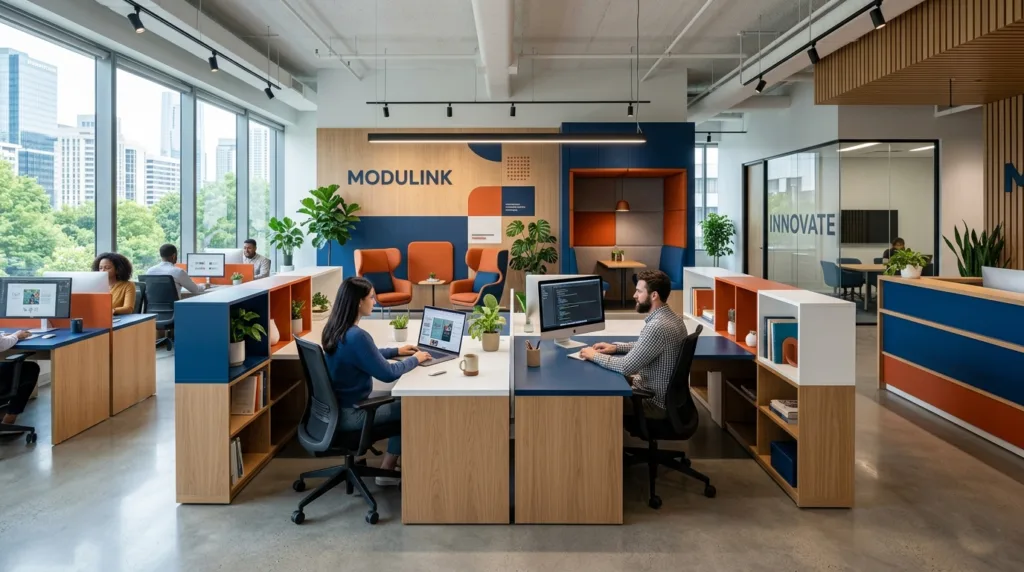
Walk into two offices in the same industry, and you’ll immediately feel the difference if one uses modular furniture well. It’s not just about desks and chairs—it’s about how the entire space feels. That’s where customization becomes a powerful advantage of modular office furniture.
Unlike traditional setups that lock you into fixed designs, modular systems give you the freedom to tailor every element. From colors and materials to shapes and configurations, you can build a workspace that reflects your company’s personality. Want a sleek, minimalist look? Go for neutral tones and clean lines. Prefer something vibrant and creative? Mix bold colors with dynamic layouts.
This level of control allows businesses to create an environment that feels intentional rather than generic. And let’s be honest—people notice. Employees, clients, and even visitors form impressions based on the workspace. A thoughtfully designed office sends a message of professionalism, creativity, and attention to detail.
Another key aspect is scalability in design. As your brand evolves, your office can evolve with it. You’re not stuck with outdated aesthetics. You can swap panels, update finishes, or reconfigure layouts without starting from scratch. It’s like giving your office a makeover without the cost and hassle of a full renovation.
Customization also extends to functionality. Different teams have different needs, and modular furniture allows you to design spaces that support specific workflows. This ensures that the office isn’t just visually appealing but also highly practical.
In a way, modular furniture turns your office into a canvas—one that you can continuously refine and adapt as your brand grows.
Reflecting Company Identity
Your office is more than just a place to work—it’s a physical representation of your brand. Every design choice, from layout to furniture, tells a story about who you are as a company. Modular office furniture makes it easier to align that story with your actual workspace.
Think about companies like Google or Apple. Their offices are designed to reflect their core values—innovation, creativity, and user-centric thinking. While not every business operates at that scale, the principle remains the same. Your workspace should mirror your identity and culture.
Modular furniture helps achieve this by offering flexibility in design and layout. A tech startup might prioritize open, collaborative spaces with bright colors and informal seating. A law firm, on the other hand, might opt for structured layouts with a more professional and understated aesthetic. Both can achieve their goals using modular systems.
There’s also an emotional connection at play. When employees feel that their workspace reflects the company’s values, it fosters a sense of belonging. It’s no longer just “an office”—it becomes a place where people feel connected to the mission and vision.
Clients and partners pick up on this as well. A well-designed office can reinforce trust and credibility. It shows that the company pays attention to detail and invests in its environment.
Ultimately, modular office furniture allows businesses to translate abstract brand values into tangible experiences—and that’s something traditional furniture struggles to do.
Sustainability and Eco-Friendliness
Reduced Waste Through Reusability
Sustainability isn’t just a buzzword anymore—it’s a responsibility. Businesses are increasingly expected to reduce their environmental impact, and office design plays a bigger role in that than many realize. Modular office furniture offers a practical way to move toward more eco-friendly practices.
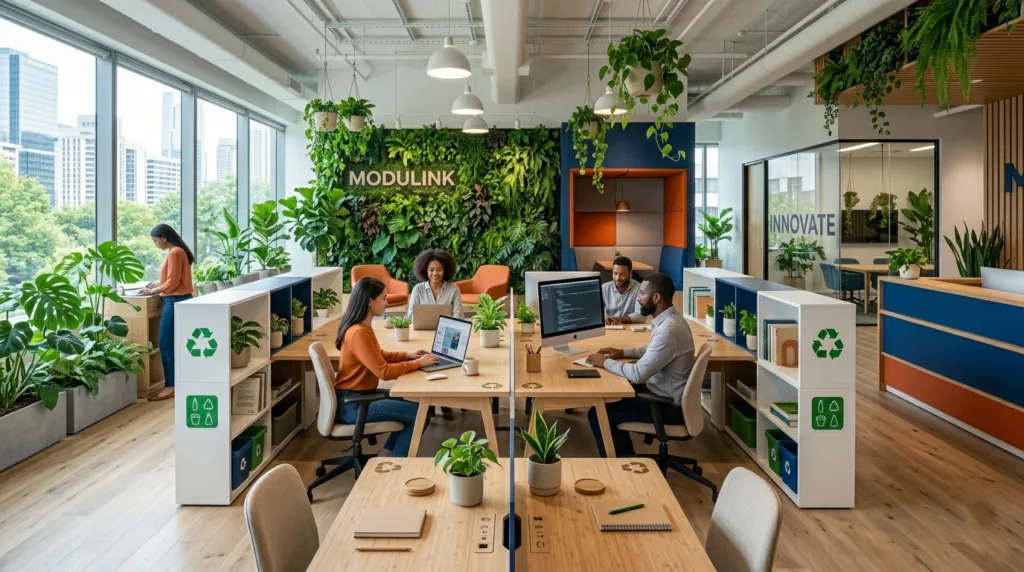
One of its biggest contributions is reducing waste. Traditional furniture often ends up in landfills when offices are redesigned or relocated. Entire sets are discarded simply because they no longer fit the layout or aesthetic. Modular furniture, however, is built for reuse and reconfiguration, which significantly cuts down on waste.
Instead of throwing everything out, you can adapt what you already have. Need a different layout? Rearrange the components. Expanding your team? Add new modules to the existing setup. This approach extends the lifespan of furniture and minimizes the need for constant replacements.
There’s also a ripple effect. Less waste means fewer resources used in manufacturing and less energy spent on transportation and disposal. Over time, this can make a meaningful difference in a company’s overall environmental footprint.
Many organizations are now tracking their sustainability metrics, and furniture choices are becoming part of that equation. Modular systems align well with these goals, offering a circular approach where materials are reused rather than discarded.
In simple terms, modular furniture helps businesses do more with less—and that’s exactly what sustainability is all about.
Eco-Conscious Material Choices
Beyond reusability, modular office furniture often incorporates environmentally friendly materials. Manufacturers are increasingly using recycled, recyclable, or sustainably sourced materials to meet growing demand for greener solutions.
For example, many modular systems feature components made from recycled metals, engineered wood, and low-emission laminates. These materials not only reduce environmental impact but also contribute to healthier indoor air quality. That’s a big deal, considering how much time employees spend in the office.
Some manufacturers also follow certifications like LEED (Leadership in Energy and Environmental Design) or use FSC-certified wood, ensuring that materials are sourced responsibly. This adds another layer of credibility for businesses looking to strengthen their sustainability initiatives.
Durability is another factor. Eco-friendly doesn’t mean fragile. In fact, modular furniture is often designed to be long-lasting, reducing the need for frequent replacements. This durability complements its sustainable nature, making it a practical choice for businesses that want to balance performance with responsibility.
There’s also a growing trend toward designing for disassembly. This means that at the end of a product’s life cycle, components can be easily separated and recycled. It’s a forward-thinking approach that aligns with modern environmental standards.
Choosing modular furniture isn’t just about functionality—it’s about making conscious decisions that benefit both the business and the planet.
Ergonomics and Employee Well-being
Adjustable Furniture Benefits
Let’s face it—most people spend a significant portion of their day sitting at a desk. If that setup isn’t comfortable, it doesn’t just cause minor discomfort—it can lead to long-term health issues. That’s why ergonomics has become a central focus in modern office design, and modular furniture plays a key role in delivering it.
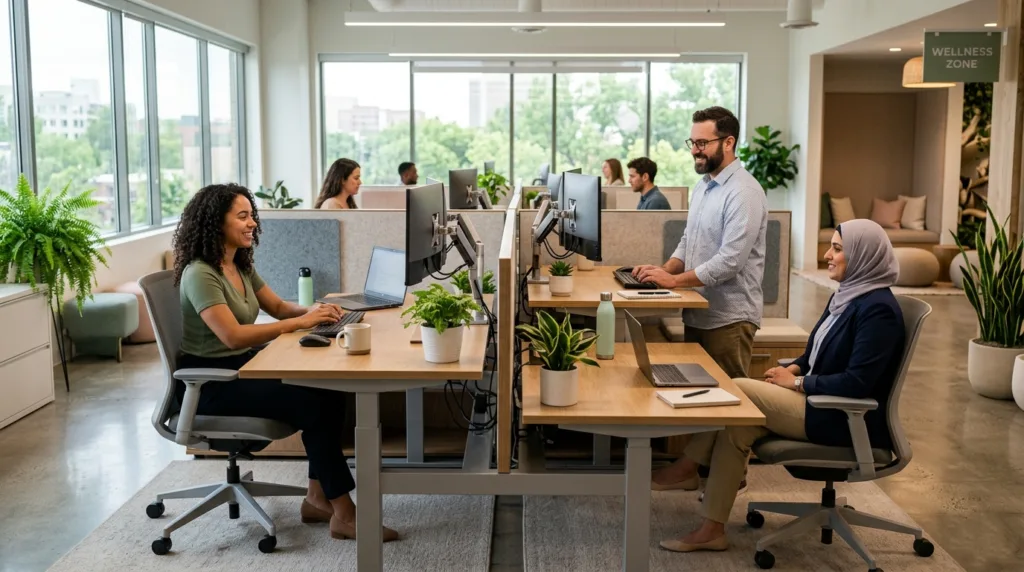
One of the biggest advantages is adjustability. Modular systems often include height-adjustable desks, flexible seating options, and customizable workstation setups. This allows employees to tailor their workspace to their specific needs, rather than forcing themselves to adapt to a one-size-fits-all design.
Why does this matter? Because everyone’s body is different. What feels comfortable for one person might be uncomfortable for another. Adjustable furniture ensures that each employee can find a setup that supports proper posture and reduces strain.
There’s also the benefit of movement. Sit-stand desks, for example, encourage employees to alternate between sitting and standing throughout the day. This can improve circulation, reduce fatigue, and even boost energy levels.
According to workplace health studies, ergonomic improvements can lead to a 25% increase in productivity and a significant reduction in musculoskeletal issues. That’s not just good for employees—it’s good for business.
In essence, modular furniture helps create a workspace that adapts to people, not the other way around.
Impact on Productivity and Health
The connection between workspace design and productivity is stronger than many realize. An uncomfortable or poorly designed environment can quietly drain energy and focus, while a well-designed one can enhance both. Modular office furniture contributes to this by supporting both physical and mental well-being.
When employees are comfortable, they can concentrate better. They’re less distracted by aches and pains, and more engaged in their work. Over time, this leads to higher efficiency and better outcomes.
There’s also a mental aspect. A flexible, well-organized workspace can reduce stress and create a sense of control. Employees feel empowered when they can adjust their environment to suit their needs.
Natural movement, improved posture, and better organization all contribute to a healthier work experience. This can lead to fewer sick days, lower healthcare costs, and higher overall morale.
Companies that prioritize employee well-being often see improvements in retention and job satisfaction. People are more likely to stay in an environment where they feel supported and comfortable.
Modular furniture doesn’t just improve how an office looks—it improves how it feels to work in it. And that makes a lasting difference.
Ease of Installation and Maintenance
Quick Assembly and Disassembly
Setting up an office can feel like assembling a giant puzzle—except the pieces are heavy, complicated, and time-consuming. Modular office furniture simplifies this process with quick and efficient assembly.
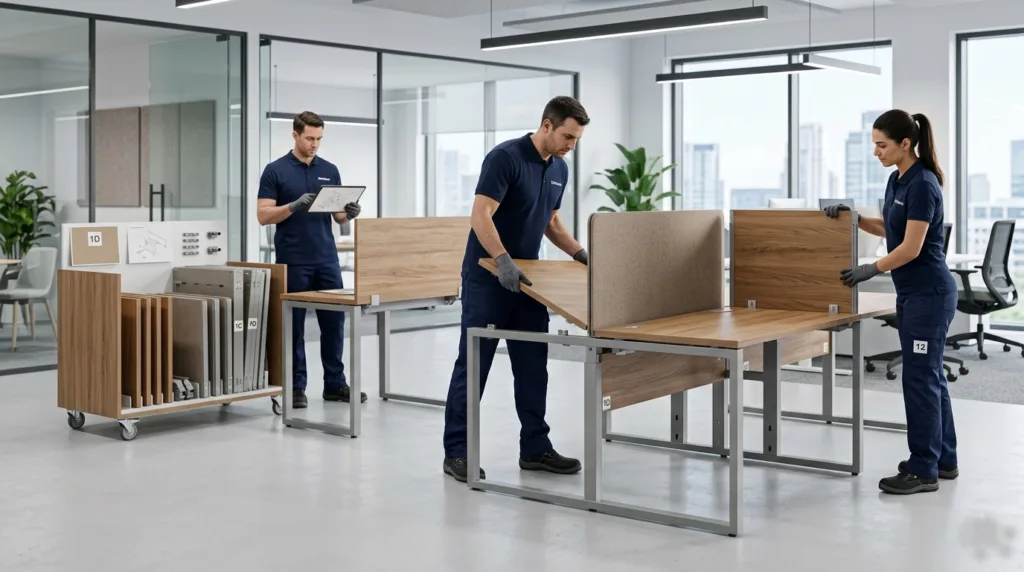
Most modular systems are designed for easy installation, often requiring minimal tools and expertise. This reduces setup time significantly, allowing businesses to get up and running faster. Whether you’re moving into a new space or reconfiguring an existing one, the process is straightforward and hassle-free.
Disassembly is just as simple. This is particularly useful for companies that relocate frequently or need to adapt their layout regularly. Instead of dealing with bulky, immovable furniture, you can break down modular components and transport them easily.
This ease of handling also reduces labor costs. You don’t always need professional installers, which can save both time and money.
In fast-paced business environments, speed matters. Modular furniture ensures that your workspace can keep up without unnecessary delays.
Simplified Repairs and Upgrades
Maintenance is often an overlooked aspect of office furniture, but it can become a major issue over time. Modular systems address this with simplified repair and upgrade processes.
Because components are standardized, fixing a problem is usually as simple as replacing a single part. There’s no need to dismantle entire setups or deal with complex repairs. This minimizes downtime and keeps the workspace functional.
Upgrades are equally straightforward. As new features or technologies become available, you can integrate them into your existing setup without starting from scratch. This keeps your office modern and efficient.
The result is a system that’s not only easy to maintain but also easy to evolve. It’s a practical solution for businesses that want to stay agile without constant disruption.
Future Trends in Modular Office Furniture
Integration with Smart Technology
The future of office furniture is not just modular—it’s smart. As technology continues to evolve, modular systems are increasingly being designed to integrate seamlessly with digital tools and devices.
Think built-in charging stations, wireless connectivity, and IoT-enabled desks that can track usage and adjust settings automatically. These features enhance convenience and create a more connected workspace.
Smart furniture can also provide valuable data. For example, sensors can track how spaces are used, helping businesses optimize their layouts for better efficiency.
This integration of technology and furniture is shaping the next generation of workspaces—ones that are not only flexible but also intelligent.
The Rise of Agile Workspaces
Agility is no longer optional—it’s essential. Businesses need to respond quickly to change, and their workspaces must support that. Modular office furniture is at the heart of this shift toward agile work environments.
Agile workspaces prioritize flexibility, collaboration, and adaptability. They’re designed to support a wide range of activities and can be reconfigured on demand.
This approach aligns with modern work culture, where teams are dynamic and projects evolve rapidly. Modular furniture provides the foundation for this flexibility, making it easier to create spaces that meet changing needs.
As the workplace continues to evolve, modular systems will play an even bigger role in shaping how we work.
Conclusion
Modular office furniture is more than just a design trend—it’s a strategic solution for modern businesses navigating constant change. From flexibility and cost savings to sustainability and employee well-being, its benefits touch nearly every aspect of the workplace. Instead of forcing companies to adapt to rigid environments, it allows the workspace to adapt to them.
As businesses continue to embrace hybrid models, prioritize employee experience, and seek efficient use of space, modular furniture stands out as a practical and forward-thinking choice. It transforms offices into dynamic environments that evolve alongside the people who use them—making work not just more efficient, but also more engaging.
FAQs
1. What is modular office furniture?
Modular office furniture consists of interchangeable components that can be rearranged, expanded, or customized to fit different workspace needs.
2. Is modular furniture cost-effective?
Yes, it reduces long-term costs by minimizing replacements, lowering renovation expenses, and allowing reuse of components.
3. Can modular furniture work in small offices?
Absolutely. It’s ideal for small spaces because it maximizes efficiency and offers multi-functional solutions.
4. Is modular office furniture eco-friendly?
Yes, it promotes sustainability through reusability, reduced waste, and the use of eco-conscious materials.
5. Does modular furniture improve productivity?
Yes, its ergonomic design and flexible layouts enhance comfort, collaboration, and overall efficiency.