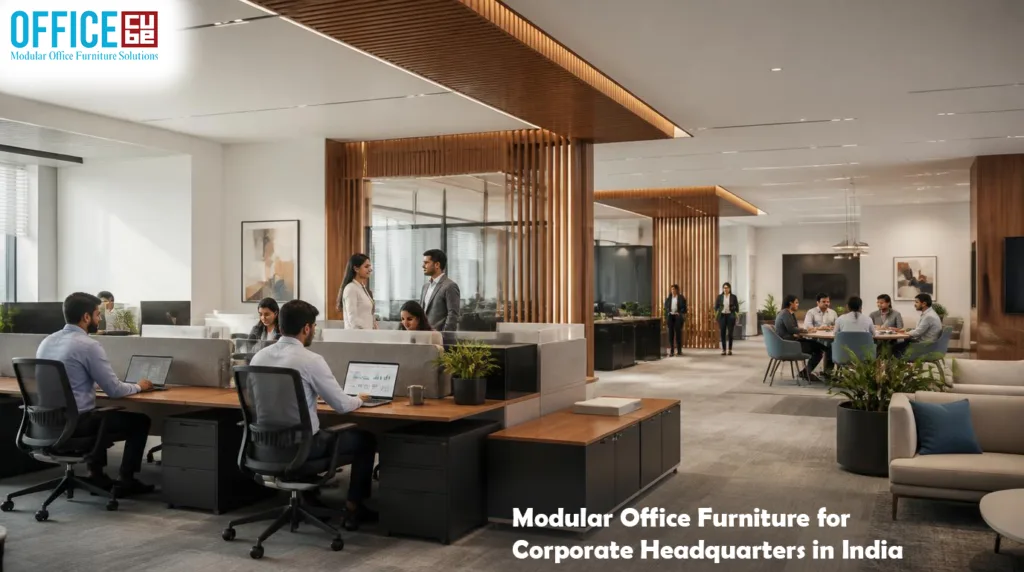
Modular Office Furniture for Corporate Headquarters in India
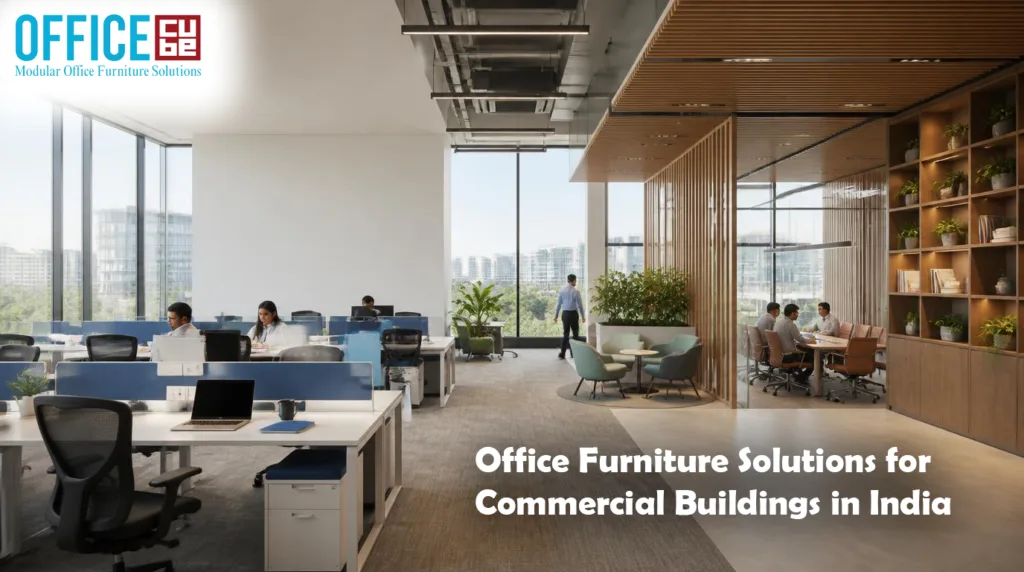
A corporate headquarters is much more than a collection of desks, chairs, cabins, and meeting rooms. It is the physical expression of a company’s culture, ambition, leadership style, and attitude toward its people. That is why choosing modular office furniture for corporate headquarters in India requires more thought than simply selecting attractive products from a catalogue. A successful headquarters needs furniture that can support focused work in the morning, collaboration in the afternoon, leadership meetings later in the day, and changing business requirements months or years down the road. This is where modular furniture becomes particularly useful. Unlike conventional fixed furniture, modular systems are designed around flexibility. Workstations can be rearranged, meeting areas can be expanded, storage can be repositioned, and departments can adapt their layouts without completely rebuilding the workplace. For growing Indian companies, that flexibility can be extremely valuable. A headquarters that looks perfect on opening day should not become inefficient simply because the organisation hires more employees, changes team structures, adopts hybrid work, or introduces new technology. The best office furniture therefore sits at the intersection of design, ergonomics, technology, durability, brand identity, and operational practicality. It should look polished enough for clients and senior executives while remaining comfortable for employees who spend long hours using it. It should also cope with India’s diverse workplace requirements, from air-conditioned corporate towers in Mumbai and Bengaluru to large headquarters campuses in Delhi NCR, Hyderabad, Chennai, Pune, Ahmedabad, and other business centres. Why Modular Furniture Fits Modern Indian Corporate Headquarters Corporate workplaces are changing quickly. Teams are becoming more fluid, employees may divide their time between home and office, and companies increasingly want offices that encourage people to collaborate rather than simply sit at assigned desks. At the same time, headquarters continue to perform an important representational role. Clients, investors, business partners, recruits, and senior stakeholders may all walk through the same reception area and meeting spaces. Modular office furniture provides a practical way to handle these competing demands. Instead of treating the office as a permanent arrangement, modular planning treats it more like an adaptable framework. The furniture can respond when the organisation changes. That distinction matters because corporate real estate is a long-term investment, while organisational structures can change much faster. A well-planned modular workplace can combine open workstations with private cabins, informal collaboration zones, enclosed meeting rooms, touchdown spaces, storage walls, breakout areas, and executive environments. These elements can share compatible finishes and design language, allowing the entire headquarters to feel coherent rather than assembled from unrelated products. For Indian businesses, another advantage is the ability to balance premium appearance with practical cost control. Not every part of a headquarters needs the same specification. A company might invest heavily in executive areas and client-facing meeting rooms while selecting highly durable, efficiently manufactured workstation systems for larger employee zones. Modular planning makes that segmentation easier. The result is an office that feels intentional rather than merely expensive. Good furniture should not shout for attention. It should make the workplace feel organised, comfortable, capable, and distinctly connected to the company behind it. Designing for Flexibility, Growth, and Changing Workstyles Flexibility should be considered from the beginning of the furniture-planning process rather than added later as an emergency solution. Imagine a company occupying an office for five years. During that period, one department may double in size, another may become smaller, teams may move from fixed seating to hybrid schedules, and new functions may appear that were not part of the original plan. A rigid furniture layout makes every organisational change expensive and disruptive. A modular system gives the company more room to respond. One of the strongest characteristics of modular furniture is reconfigurability. Workstations can be arranged in clusters, rows, pods, or team neighbourhoods depending on the work being performed. Screens can provide varying levels of visual separation without requiring permanent walls. Storage can help define zones, while mobile or modular meeting furniture can allow spaces to serve multiple purposes. This is particularly useful in headquarters where different departments have different working patterns. Finance may require concentrated desk-based work and secure storage. A creative or product team may need large collaborative surfaces. Human resources may require confidential conversation areas. Sales teams may benefit from touchdown spaces and small meeting rooms. Senior management may need private offices combined with shared boardrooms and strategy rooms. A good modular system allows these requirements to coexist without making the workplace feel fragmented. The design language can remain consistent while the configuration changes from one area to another. Flexibility also has a financial dimension. If a company can relocate or reconfigure existing components rather than discard an entire furniture installation, the useful life of the investment can increase. That makes modular furniture particularly attractive for businesses that expect expansion, relocation, mergers, restructuring, or changing workplace policies. The smartest approach is therefore to design not only for today’s headcount but also for tomorrow’s organisational possibilities. Balancing Executive Image With Everyday Functionality A corporate headquarters has a public-facing personality. Reception areas, executive offices, boardrooms, client lounges, and important meeting spaces often shape the first impression visitors receive. Yet an impressive headquarters should never sacrifice the everyday needs of employees simply to create a premium visual statement. The challenge is finding a balance between corporate aesthetics and workplace performance. Modular furniture can help because different configurations and finish combinations can create distinct environments while maintaining a common design identity. A company may use refined wood-look finishes and premium seating in executive areas, for example, while using durable laminates, practical storage, and ergonomic workstations across larger employee zones. The reception area can establish the visual language of the headquarters. From there, that language can continue subtly through workstation screens, meeting tables, storage systems, conference furniture, and executive desks. Consistency does not mean every room must look identical. In fact, excessive uniformity can make a large headquarters feel sterile. Instead, think of the furniture as a corporate vocabulary. Colours, materials, textures, proportions, and details are the words. Different
Modular Office Furniture for Corporate Headquarters in India Read More »