
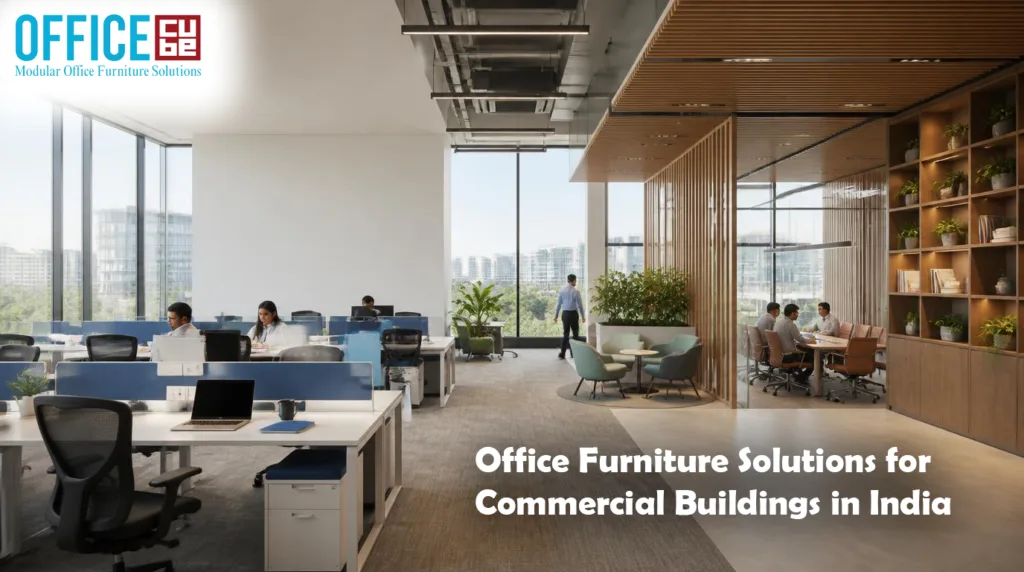
Why Office Furniture Matters in Indian Commercial Buildings
Office furniture is no longer something businesses select simply to fill an empty commercial building. In a modern Indian workplace, furniture has become part of the building’s functional infrastructure, influencing how people work, communicate, move, collaborate, and experience the organization every day. A well-planned office can make a large floor plate feel organized and comfortable, while poorly selected furniture can turn even a premium commercial property into a cramped, noisy, inefficient environment. This is particularly important in India, where commercial buildings range from compact urban offices and coworking spaces to expansive corporate campuses, technology parks, business centers, financial institutions, and mixed-use developments. Each type of property creates different demands for furniture, circulation, privacy, storage, durability, and maintenance.
The right furniture solution also needs to balance several competing requirements. A business may want an attractive workplace, but it also needs desks that withstand daily use, chairs that support employees for long working hours, storage that does not consume excessive floor area, and meeting furniture that accommodates changing team sizes. Building managers may be concerned with maintenance and replacement cycles, while architects and facility teams may focus on space utilization and installation. Employees, meanwhile, experience the furniture at the most personal level: they notice whether their chair is comfortable, whether their desk provides enough room, and whether shared areas actually work. Good commercial furniture connects all of these concerns rather than treating them as separate purchasing decisions.
There is also a branding dimension. The reception desk, conference table, executive furniture, partitions, finishes, and collaborative areas collectively communicate what a company wants visitors and employees to see. A technology company might prefer a flexible and informal atmosphere, while a law firm or financial organization may require a more traditional professional appearance. The goal is not to follow one universal design formula. Instead, businesses should select office furniture solutions that reflect their operational needs, available floor space, workforce patterns, brand identity, and expected growth. When these factors are considered together, furniture becomes an investment in the performance of the entire workplace rather than a collection of individual products.
Understanding the Main Types of Office Furniture
Commercial buildings usually require several categories of furniture because employees and visitors do not use every area in the same way. A workstation designed for concentrated computer work has different requirements from a conference table, reception counter, lounge chair, or executive desk. Treating all furniture as interchangeable often leads to inefficient layouts and inconsistent workplace experiences. A better approach is to divide the office into functional zones and then select furniture that supports the purpose of each zone. This can also simplify procurement because businesses can develop standardized furniture specifications for recurring requirements across floors or multiple locations.
A typical commercial office may include individual workstations, benching systems, private office desks, ergonomic task chairs, visitor seating, meeting tables, conference chairs, reception counters, storage units, pedestals, filing systems, collaborative tables, lounge furniture, cafeteria furniture, and specialized pieces for training or multipurpose rooms. Some workplaces also need height-adjustable desks, acoustic furniture, phone booths, movable partitions, lockers, library shelving, and custom-built reception or executive areas. The correct mix depends on the organization’s work style and the building’s architectural configuration. For example, a consulting office with frequent client meetings may allocate more space to meeting rooms and visitor seating, whereas a software company may prioritize workstations, collaboration zones, and informal meeting spaces.
Standardization can be useful when a company operates several offices. Selecting a consistent workstation dimension, chair specification, storage module, and finish palette can simplify maintenance and replacement. At the same time, excessive standardization can make a workplace inflexible. Commercial furniture therefore works best when there is a common design language with enough modularity to accommodate different departments and future changes. Businesses should also consider how furniture will enter the building, pass through elevators and corridors, be assembled on site, and eventually be repaired or replaced. In a commercial environment, a product is only truly practical when its entire lifecycle—from delivery to maintenance—is manageable.
Workstations and Modular Desks
Workstations are often the foundation of a commercial office furniture plan because they occupy a significant portion of the usable floor area and directly affect everyday employee experience. In India, modular workstation systems are particularly useful for businesses that need to accommodate changing team sizes or make efficient use of commercial floor plates. Depending on the layout, companies can choose linear arrangements, clustered workstations, back-to-back configurations, L-shaped stations, or benching systems. Modular components can also allow businesses to modify configurations later rather than replacing every desk when organizational requirements change.
A good workstation should provide adequate working surface, comfortable legroom, practical cable management, and sufficient access to power and data connections. Screens or modest privacy panels can help define personal space without creating a visually heavy environment. Where collaboration is frequent, excessively high partitions may interfere with communication, while completely open arrangements can make employees feel exposed and increase distractions. The right balance depends on the organization’s work patterns. Departments that require concentration, confidential conversations, or extensive documentation may need more privacy than teams whose work is naturally collaborative.
Durability is equally important. Commercial workstations are subjected to repeated movement, cleaning, chair impacts, cable adjustments, and daily wear that residential furniture rarely experiences. Materials, edge treatments, hardware, fasteners, and surface finishes should therefore be selected for the expected intensity of use. Businesses should also ask whether individual components can be replaced if damaged. A modular workstation system becomes considerably more valuable when a damaged top, partition, cable tray, or fitting can be replaced without dismantling an entire workstation cluster. For growing organizations, this modularity can reduce disruption when teams expand, contract, or relocate. The best workstation solution is therefore not simply the one that looks attractive on installation day; it is the one that continues to function efficiently as the workplace evolves.
Executive Desks and Private Office Furniture
Executive offices often require a different furniture approach because they combine focused work, confidential discussions, storage, and visitor interaction. An executive desk typically serves as the central working surface, but the surrounding furniture can be just as important. Visitor chairs, a small meeting table, credenza, storage cabinet, bookshelf, and display elements may all be necessary depending on the room’s size and purpose. Rather than filling the room with oversized furniture, planners should consider circulation, sightlines, natural light, access to technology, and the number of people who regularly use the space.
The visual character of executive furniture can also contribute to a company’s professional identity. Wood-look finishes, contemporary laminates, metal details, glass elements, textured surfaces, or minimalist forms can create very different impressions. There is no single definition of an executive office, and Indian commercial workplaces increasingly use a wide range of design languages. The key is consistency. An expensive desk paired with mismatched storage and unsuitable visitor seating can look less polished than a coordinated modular collection selected with restraint.
Private offices should also be designed around actual work habits rather than assumptions about hierarchy. Some senior professionals spend much of their day in meetings and need a small collaborative setting more than a huge desk. Others handle confidential documents and require substantial storage. Some offices are shared by two or more people and need furniture that preserves personal working space without wasting floor area. Adjustable furniture and modular storage can make these rooms more adaptable. When the furniture supports the way the room is actually used, the office becomes more functional and less dependent on status-driven dimensions.
Meeting, Conference, and Collaborative Furniture
Meeting spaces are increasingly important in Indian commercial buildings because office work now involves a mixture of individual concentration, scheduled meetings, hybrid communication, presentations, workshops, and spontaneous collaboration. Conference tables remain a common choice for formal meetings, but commercial workplaces can benefit from using different table shapes and seating arrangements for different activities. Rectangular tables work well for structured meetings, while round or modular tables can create a more conversational setting. Folding or movable tables may be useful in training rooms where the layout changes regularly.
Seating should be selected with both comfort and movement in mind. Conference chairs may be used for extended sessions, so a visually appealing chair that becomes uncomfortable after an hour is a poor long-term choice. Collaborative areas can use a combination of task chairs, stools, lounge seating, and lightweight movable chairs where appropriate. The objective is to give employees options without turning every shared space into a furniture showroom. Clear circulation around tables is equally important because cramped meeting rooms can become difficult to use, particularly when people carry laptops, documents, or presentation equipment.
Technology has also changed what meeting furniture needs to accommodate. Tables may need integrated power, charging, cable access, microphones, displays, cameras, or connectivity equipment. The best solution hides or organizes these elements rather than allowing cables to dominate the room. For businesses with hybrid teams, furniture should support both people physically present and colleagues joining remotely. A conference room is no longer successful merely because it can seat twelve people; it should also allow those twelve people to see, hear, share, and interact with remote participants effectively.
Storage, Reception, and Utility Furniture
Storage is easy to underestimate during an office fit-out. Businesses often focus heavily on desks and chairs and discover later that documents, stationery, equipment, personal belongings, cleaning supplies, and other materials have nowhere practical to go. Storage furniture can include pedestals, mobile cabinets, tall cupboards, open shelving, lockers, credenzas, filing systems, and specialized equipment cabinets. The correct combination depends on how much physical documentation the organization maintains and how frequently employees need access to stored items.
Reception furniture deserves special attention because it often creates the first physical impression of a commercial workplace. A reception counter needs to be visually appropriate while providing enough working space for reception personnel, visitors, computers, communication equipment, and storage. Seating in the waiting area should suit the expected visitor volume and duration. Material selection is important here because reception spaces experience constant public contact and therefore need finishes that remain presentable under frequent cleaning.
Utility furniture should be equally practical even though it is less visible. Pantry counters, cafeteria tables, lockers, printer stations, server-related cabinets, and maintenance storage can all affect how smoothly an office operates. Poorly planned utility areas often create congestion because equipment is placed wherever space remains after the main furniture has been installed. Integrating these requirements into the initial furniture plan avoids expensive changes later. In a large commercial building, small operational inefficiencies can repeat hundreds of times each day, making practical utility furniture a surprisingly important part of workplace planning.
Ergonomics and Employee Comfort
Ergonomics should be treated as a core requirement of office furniture rather than a premium feature added only when budgets allow. Employees may spend many hours working at desks, and furniture that does not accommodate different body sizes, postures, and working habits can create unnecessary discomfort. An ergonomic workplace does not mean buying one particular type of chair and assuming the problem is solved. It means creating an environment where desks, seating, monitor positions, keyboard and mouse placement, lighting, and movement opportunities work together. Furniture provides the physical foundation for that environment.
Task chairs are particularly important because employees interact with them throughout the working day. Useful features can include adjustable seat height, suitable seat depth, lumbar support, backrest movement, armrest adjustment, and a stable base. Not every employee needs exactly the same settings, which is why adjustability matters. A chair should allow the user to establish a comfortable working position rather than forcing everyone into a fixed posture. Desk height and monitor positioning also need consideration, especially as organizations use multiple screens or laptops.
Height-adjustable desks are another option for workplaces seeking greater flexibility. They can allow employees to alternate between sitting and standing, although the furniture itself does not guarantee healthier behavior. Employees still need appropriate guidance on setup and regular movement. The broader lesson is that ergonomics is a system, not a single product category. Businesses should also consider whether chairs and desks can accommodate employees with different physical needs and whether accessible routes and work areas are incorporated into the overall layout. Comfortable furniture can support employee experience, but thoughtful workplace planning makes that comfort usable at scale.
Choosing Materials for Indian Office Environments
Material selection has a direct effect on appearance, durability, maintenance, and lifecycle cost. Commercial furniture in India may encounter intensive daily use, frequent cleaning, dust, temperature variations, humidity differences, and heavy movement of people and equipment. The most attractive finish is not automatically the most practical one. A business should evaluate surfaces based on where they will be installed and how they will be used. A reception counter, for example, may need different surface characteristics from an individual workstation or a cafeteria table.
Common furniture materials include engineered wood panels, laminates, veneers, metals, glass, fabrics, plastics, and composite materials. Each has advantages and limitations. Laminated surfaces can offer a wide range of colors and patterns while being relatively straightforward to maintain. Metal can provide structural strength and a contemporary appearance, particularly in workstation frames and storage systems. Fabric adds warmth and acoustic value to certain environments, but it requires appropriate cleaning and maintenance. Glass can visually lighten a space but needs careful consideration for privacy, safety, fingerprints, and cleaning.
Local climate and building conditions should also influence specifications. Commercial buildings in coastal regions may face different environmental considerations from offices in dry or highly seasonal climates. Furniture should be selected with appropriate hardware, finishes, adhesives, edge treatments, and maintenance requirements. Procurement teams should request material specifications rather than relying only on showroom appearance. It is also useful to ask about replacement parts, warranty terms, cleaning instructions, and expected service life. A material that costs slightly more initially may offer better value if it remains attractive and functional for substantially longer. Commercial furniture should therefore be evaluated as a lifecycle purchase rather than simply by its invoice price.
Space Planning and Office Layout
Furniture selection should begin with space planning rather than shopping. Before deciding which desk to buy, businesses should understand the building’s usable area, structural constraints, circulation paths, columns, doors, windows, electrical points, fire-safety requirements, HVAC considerations, and other fixed elements. The furniture plan should then establish zones for individual work, collaboration, meetings, reception, storage, circulation, pantry facilities, and other operational needs. This prevents the common mistake of purchasing attractive products that do not fit together efficiently.
Indian commercial buildings can vary dramatically in floor plate shape and efficiency. A large open floor may provide flexibility but require careful zoning to prevent visual and acoustic chaos. A narrow floor plate may require linear planning and careful placement of meeting rooms. Columns can interrupt workstation arrangements, while windows can create valuable daylight zones that should not automatically become storage areas. Furniture can help solve some of these challenges through modular dimensions, movable partitions, shared storage, and flexible meeting settings.
Future change should also be considered. Businesses rarely remain static throughout a furniture’s entire lifecycle. Teams grow, departments merge, hybrid working patterns change, and companies may occupy additional floors. A layout that works perfectly for today’s headcount may become inefficient after an organizational change. Modular furniture provides an opportunity to reconfigure without starting from zero. Planning should therefore consider not only current occupancy but also realistic scenarios for growth and change. Good space planning is less about fitting the maximum number of desks into a building and more about creating a workplace where people, furniture, technology, and circulation can coexist comfortably.
Technology Integration in Modern Office Furniture
Technology has become inseparable from office furniture. A desk is no longer simply a flat surface for paper and a telephone. Employees may work with laptops, multiple monitors, docking stations, charging devices, headsets, cameras, and other equipment. Meeting rooms can require displays, cameras, speakers, microphones, control systems, and connectivity points. If these needs are not considered during furniture planning, cables can become tangled across floors and desks, creating both visual clutter and practical problems.
Cable management is one of the simplest but most valuable features to consider. Workstations can incorporate cable trays, grommets, vertical cable channels, and access points that route wires safely and neatly. Meeting tables can include power and connectivity modules so participants do not need to search for wall sockets. Shared charging stations can support flexible collaboration areas. These details may appear minor during procurement, but they become highly visible when dozens or hundreds of employees use the workplace every day.
Hybrid work has added another layer of complexity. Meeting furniture now needs to support participants who are physically present as well as people joining from other locations. Camera positioning, sightlines, acoustic conditions, table geometry, and screen placement can influence the quality of virtual interaction. Furniture manufacturers and workplace designers therefore increasingly need to think about technology as part of the furniture ecosystem. The most successful solutions hide or organize technology while keeping it accessible. When the furniture and technology are designed together, the workplace feels simpler to use because employees do not have to improvise their own solutions every morning.
Sustainable and Eco-Conscious Furniture Solutions
Sustainability in commercial furniture is moving beyond the simple question of whether a product contains recycled material. Businesses increasingly need to consider where materials come from, how products are manufactured, how long they will last, whether components can be repaired, and what happens when the furniture reaches the end of its useful life. A durable product that remains in service for many years may reduce replacement demand, while modular furniture can potentially be adapted instead of discarded when office requirements change.
Material transparency can help procurement teams make better decisions. Businesses can ask suppliers about board specifications, surface materials, recycled content where applicable, coatings, adhesives, packaging, and manufacturing practices. Environmental certifications can provide additional information when they are relevant and independently documented. However, sustainability claims should be examined carefully rather than accepted purely because marketing language uses terms such as “green,” “eco-friendly,” or “natural.”
Furniture longevity is another major sustainability factor. Replaceable components, repairable hardware, modular panels, and standardized parts can extend useful life. If a chair’s caster or armrest can be replaced rather than requiring complete replacement of the chair, the organization has more options. Similarly, a workstation system that can be dismantled and reconfigured can potentially move with a business when it changes premises. Sustainable procurement is therefore closely connected to practical procurement. Buying fewer products that perform reliably for longer can be more meaningful than repeatedly replacing low-cost furniture.
Safety, Accessibility, and Practical Requirements
Commercial furniture needs to operate within the wider safety requirements of a building. Furniture placement should not obstruct designated exits, emergency routes, access to safety equipment, or other building infrastructure. Large cabinets should be appropriately installed where stability is a concern, while glass and other materials should be specified and installed with suitable safety considerations. These details should be coordinated with architects, facility managers, contractors, and relevant building professionals rather than handled as an afterthought.
Accessibility also deserves attention from the beginning. A workplace should provide usable routes and work areas for people with different mobility requirements. Furniture layouts can influence whether a person using a wheelchair or mobility aid can navigate a workspace, approach a desk, enter a meeting area, or use shared facilities comfortably. Adjustable furniture can also support employees with different physical requirements. Accessibility should not be reduced to a single designated desk or isolated area; it works best when incorporated throughout workplace planning.
Maintenance and housekeeping are practical safety considerations as well. Furniture that is difficult to clean can become problematic in high-traffic environments. Loose cables, unstable furniture, blocked circulation, and overcrowded storage areas can create avoidable risks. Facility teams should have clear maintenance procedures and access to replacement components. During procurement, businesses should ask suppliers how service requests are handled, how quickly spare parts can be supplied, and whether installation teams are available when furniture needs to be reconfigured. A commercial furniture solution should make the building easier to operate, not harder.
How to Plan an Office Furniture Procurement Project
A successful furniture procurement project usually begins with a detailed requirements assessment. The organization should identify employee headcount, departments, work patterns, meeting requirements, storage needs, visitor volumes, future expansion expectations, technology requirements, and design preferences. A site survey should then establish actual dimensions and fixed building conditions. This information provides a much stronger foundation for procurement than simply asking multiple vendors for their catalog and selecting products based on appearance.
The next stage is developing specifications. Instead of writing only “office chair” or “workstation,” the procurement team should define the characteristics that matter: dimensions, adjustability, materials, finish, cable management, load requirements where relevant, warranty expectations, installation requirements, and compatibility with other components. Standardized specifications make vendor comparisons more meaningful. Businesses can then evaluate samples or prototypes before committing to large quantities.
Installation should be treated as part of the project rather than as a separate final task. Furniture delivery in a commercial building may involve loading docks, service elevators, restricted working hours, security procedures, floor protection, packaging removal, and phased installation. If the office is already occupied, installation may need to happen in sections to minimize disruption. A good supplier should be able to coordinate with the project schedule and building management. After installation, the team should inspect furniture, verify quantities, check alignment and hardware, and provide employees with basic instructions for adjustable products. Procurement is complete only when the furniture is installed correctly and ready for everyday use.
Office Furniture Budgeting and Cost Considerations
Budgeting for office furniture requires more than multiplying the number of employees by the price of a desk and chair. A complete budget can include workstations, seating, meeting furniture, storage, reception furniture, collaboration areas, partitions, technology integration, transportation, installation, taxes, maintenance, and potential future modifications. Businesses that ignore these secondary costs may discover that a seemingly inexpensive furniture package becomes considerably more expensive by the time it is operational.
The cheapest product is not necessarily the lowest-cost solution over its useful life. Suppose one chair has a lower purchase price but requires frequent repairs or replacement, while another has a higher initial cost and remains functional for considerably longer. Comparing only the initial invoices misses the broader financial picture. Businesses can also consider standardization because using fewer furniture families may simplify spare parts, repairs, training, and future expansion. Modular systems can provide similar benefits when components are interchangeable.
Procurement teams should also consider the cost of disruption. A furniture system that takes significantly longer to install can affect business operations, especially in an occupied office. Products that require extensive custom fabrication may create longer lead times and make future replacements difficult. This does not mean custom furniture is unsuitable; it means the business should understand where customization creates genuine value. A sensible commercial furniture budget balances appearance, functionality, durability, installation, maintenance, and future flexibility rather than optimizing one line item in isolation.
Current Trends Shaping Commercial Office Furniture in India
Indian workplaces are increasingly experimenting with flexible layouts that support different modes of work. Instead of giving every employee exactly the same fixed environment, businesses may combine individual workstations with meeting rooms, collaboration tables, quiet areas, informal seating, and shared spaces. The purpose is to give employees a range of settings for different activities. This approach can be particularly useful where work alternates between focused tasks, team discussions, virtual meetings, and informal conversations.
Another trend is the movement toward lighter and more adaptable furniture. Mobile tables, movable seating, modular partitions, and reconfigurable workstations can allow spaces to change throughout the day or as business requirements evolve. Color and material choices are also becoming more varied. Many offices are combining professional neutral finishes with warmer textures, natural-looking surfaces, acoustic elements, and carefully placed brand colors. The result can feel less institutional without sacrificing functionality.
Ergonomics and technology remain strong priorities as well. Height-adjustable desks, ergonomic seating, monitor support, integrated charging, cable management, and technology-enabled meeting furniture are becoming part of broader workplace planning. At the same time, companies are paying more attention to employee experience and the environmental impact of their procurement decisions. These trends do not mean every office needs the latest product category. The more useful question is whether a particular trend solves a genuine workplace problem. Furniture should serve the organization rather than forcing the organization to adapt to fashionable products.
How to Choose an Office Furniture Manufacturer or Supplier
Choosing the right supplier can be as important as selecting the furniture itself. Commercial projects involve quantities, deadlines, installation, warranty support, replacements, and sometimes multiple locations, so supplier capability matters. Businesses should examine a manufacturer’s or dealer’s product range, manufacturing capacity where applicable, customization capabilities, quality-control processes, installation support, service network, and experience with projects of comparable scale. References and completed project examples can provide useful evidence of practical capability.
Product demonstrations and samples can reveal details that photographs cannot. A chair should be tested by different users, workstation components should be inspected, and surface finishes should be viewed under actual office lighting where possible. Procurement teams should examine joints, hardware, edge finishing, adjustment mechanisms, cable management, and storage access. They should also ask how replacement components are handled. A supplier that provides strong installation but poor after-sales support may create difficulties later, particularly for businesses with large furniture inventories.
Commercial terms should be reviewed carefully. Warranty duration is useful information, but businesses should also understand what the warranty covers, who handles service calls, what exclusions apply, and how spare parts are sourced. Lead times should be confirmed in writing, especially for customized products or large projects. It is also sensible to clarify packaging removal, installation responsibilities, site requirements, and payment milestones. A reliable supplier relationship is built on transparent specifications and realistic commitments. The objective is not merely to find a company that can sell furniture; it is to find a partner capable of supporting the workplace throughout the furniture lifecycle.
Conclusion
Office furniture solutions for commercial buildings in India require a careful balance of design, ergonomics, durability, technology, space efficiency, maintenance, accessibility, and cost. A successful workplace does not emerge from choosing individual products one at a time. It comes from understanding how employees use the building and then creating a coordinated furniture system around those activities. Workstations, executive areas, meeting rooms, reception spaces, storage, collaborative zones, and technology infrastructure should work together rather than compete for attention.
For businesses planning a new office or upgrading an existing commercial property, the most useful starting point is a detailed requirements assessment. Understand the building, study employee workflows, establish realistic furniture standards, consider future changes, and evaluate suppliers based on both products and service. Pay attention to lifecycle costs instead of focusing only on initial purchase prices. Ergonomic seating, durable materials, modular construction, organized cable management, and maintainable components can all contribute to a workplace that remains useful long after the initial installation.
The Indian commercial office landscape continues to evolve, and furniture needs to evolve with it. Flexible work patterns, hybrid meetings, sustainability concerns, employee expectations, and changing space requirements are reshaping how organizations think about their interiors. The strongest furniture strategy is therefore not necessarily the most elaborate one. It is the one that makes everyday work easier, uses the available building intelligently, supports people comfortably, and gives the business enough flexibility to adapt when tomorrow’s requirements look different from today’s.
FAQs
1. What type of office furniture is most suitable for commercial buildings in India?
The most suitable furniture depends on the building, workforce, business activity, available floor area, and operating model. A typical commercial office may require modular workstations, ergonomic task chairs, meeting tables, conference seating, executive furniture, storage systems, reception furniture, and collaborative seating. Organizations with flexible or hybrid working patterns may also benefit from movable furniture and multipurpose spaces. The important point is to develop a coordinated furniture plan rather than selecting every product independently. Durability, ergonomics, maintenance, technology integration, and future reconfiguration should all be considered before making a large purchase.
2. How can businesses make office furniture more ergonomic?
Businesses can improve workplace ergonomics by selecting adjustable chairs, appropriately sized desks, suitable monitor positioning, organized cable systems, and furniture that accommodates employees of different body sizes. Height-adjustable desks may provide additional flexibility for employees who want to alternate between sitting and standing. However, ergonomic furniture works best when combined with correct workstation setup and regular movement. Employees should be able to adjust their chairs and equipment rather than being forced into a fixed position. Organizations can also provide basic guidance on workstation setup so employees understand how to use adjustable furniture effectively.
3. What should companies consider when choosing office furniture suppliers in India?
Companies should evaluate product quality, manufacturing or sourcing capability, customization options, installation capacity, warranty conditions, service coverage, spare-part availability, project experience, and delivery timelines. For large commercial projects, the supplier’s ability to manage installation and after-sales service can be just as important as the furniture itself. Businesses should request detailed specifications and, where possible, inspect physical samples before finalizing an order. It is also useful to clarify responsibilities for delivery, installation, packaging removal, repairs, and future replacements. A transparent supplier can make a large furniture project significantly easier to manage.
4. Is modular office furniture a good choice for growing businesses?
Modular furniture can be particularly useful for growing organizations because components can often be rearranged, expanded, or replaced as requirements change. A business may be able to add workstations, move partitions, change storage configurations, or reorganize departments without replacing its entire furniture inventory. The exact level of flexibility depends on the furniture system, so buyers should examine how easily components can be reconfigured and whether replacement parts remain available. Modular planning can also help organizations standardize furniture across multiple floors or locations while still allowing different layouts for different teams.
5. How can companies control office furniture costs without compromising functionality?
Cost control starts with understanding actual requirements instead of purchasing furniture based purely on appearance or brand positioning. Businesses can standardize commonly used products, select durable materials, compare lifecycle costs, reduce unnecessary customization, and prioritize features that employees genuinely use. A clear space plan can also prevent over-ordering and reduce expensive changes after installation. When comparing suppliers, companies should consider delivery, installation, warranty, maintenance, and replacement costs in addition to the initial purchase price. A balanced procurement strategy can provide functional, attractive furniture without treating the lowest initial price as the only measure of value.