Blog

Your blog category

Best Executive Desk Design for Offices

Best Executive Desk Designs for Offices

Why Executive Desks Matter in Modern Offices Walk into any office, and the executive desk immediately tells a story. It’s not just a piece of furniture—it’s a statement of authority, personality, and professionalism. Think about it: when someone enters an executive office, where do their eyes land first? Almost always, it’s the desk. That large, thoughtfully designed centerpiece sets the tone for everything from meetings to decision-making. In today’s evolving workplace, executive desks have gone beyond bulky wooden tables. They’ve become smarter, sleeker, and more adaptable to modern needs. According to recent workspace design trends, over 68% of professionals believe office aesthetics directly impact productivity and confidence. That’s not surprising. A well-designed executive desk can boost focus, enhance workflow, and even influence how others perceive leadership. But it’s not just about appearances. Functionality plays an equally critical role. Executives juggle multiple responsibilities—meetings, digital work, paperwork—and their desks need to support all of that seamlessly. A poorly designed desk can lead to clutter, discomfort, and inefficiency, which no leader can afford. There’s also a psychological angle here. A strong, organized workspace fosters clarity of thought. Imagine sitting behind a desk that feels chaotic versus one that feels intentionally designed. Which one would help you think better? Exactly. Executive desks are evolving to meet hybrid work demands too. With remote meetings, multiple monitors, and constant connectivity, desks now need built-in tech integration. It’s no longer optional—it’s essential. So, choosing the right executive desk isn’t just about furniture shopping. It’s about creating an environment that supports leadership, productivity, and presence. Balancing Style and Functionality Here’s where things get interesting—and tricky. You want a desk that looks impressive, but you also need one that actually works for you. It’s like buying a luxury car; it should turn heads, but it also needs to drive smoothly. Style and functionality often feel like they’re pulling in opposite directions. A sleek glass desk might look stunning, but is it practical for daily use? On the flip side, a heavy wooden desk might offer tons of storage but feel outdated or bulky. The key is finding that sweet spot where aesthetics meet usability. Modern executive desks are increasingly designed with this balance in mind. Designers are blending materials—wood with metal, glass with engineered surfaces—to create pieces that are both visually appealing and highly functional. You’ll find desks with hidden compartments, cable management systems, and modular components that adapt to your needs. Another important factor is personalization. Your desk should reflect your working style. Are you someone who thrives on minimalism, with just a laptop and a notebook? Or do you need multiple drawers, files, and accessories within reach? There’s no one-size-fits-all answer here. Lighting, color, and texture also play a role. Dark wood conveys authority and tradition, while lighter finishes feel modern and approachable. Matte surfaces reduce glare, which is especially helpful if you’re working long hours on screens. At the end of the day, the best executive desk is one that feels like an extension of you. It should support your workflow without getting in your way, all while making a strong visual statement. Key Features of a High-Quality Executive Desk Materials and Durability When it comes to executive desks, materials are everything. They don’t just determine how the desk looks—they define how long it lasts and how it performs under daily use. Imagine investing in a desk that starts showing wear within months. That’s not just frustrating; it’s a poor investment. Solid wood remains a top choice for executive desks, and for good reason. It’s durable, timeless, and exudes a sense of authority. Woods like oak, walnut, and mahogany are particularly popular because they combine strength with rich aesthetics. However, they can be expensive, which leads many buyers to explore alternatives. Engineered wood and MDF (medium-density fiberboard) have come a long way in recent years. High-quality versions offer impressive durability and can mimic the appearance of solid wood at a fraction of the cost. Metal frames are also gaining popularity, especially in modern designs, as they add stability and a contemporary edge. Glass is another material that’s often used in executive desks, but it comes with trade-offs. While it looks sleek and modern, it requires regular cleaning and may not be as durable as other materials. Tempered glass is a safer option if you’re considering this style. Durability isn’t just about materials—it’s also about construction. Look for desks with strong joints, smooth finishes, and high-quality hardware. Drawers should glide effortlessly, and surfaces should resist scratches and stains. In essence, the best executive desk is built to withstand years of use without losing its appeal. It’s an investment, not a temporary solution. Storage and Organization Let’s be honest—no matter how digital we become, physical storage still matters. Documents, gadgets, office supplies—they all need a place. That’s where a well-designed executive desk truly shines. A cluttered desk can quickly derail productivity. Studies suggest that cluttered workspaces can reduce efficiency by up to 20%, which is a significant impact over time. Executive desks are designed to combat this with smart storage solutions. Drawers are the most obvious feature, but not all drawers are created equal. Deep file drawers, lockable compartments, and soft-close mechanisms add both convenience and security. Some desks even include hidden compartments, which are perfect for keeping valuables or sensitive documents out of sight. Cable management is another critical aspect of organization. With multiple devices—laptops, monitors, chargers—cables can quickly become a tangled mess. Modern executive desks often include built-in cable routing systems, keeping everything neat and accessible. Shelving and modular add-ons are also worth considering. They provide additional space without overcrowding the desk surface. Some designs even integrate vertical storage, making the most of limited space. Ultimately, the goal is to create a workspace where everything has its place. When your desk is organized, your mind follows suit. And in a high-pressure executive role, that clarity can make all the difference. Popular Executive Desk Styles Traditional Executive Desks There’s something undeniably powerful about a traditional executive

Best Executive Desk Designs for Offices Read More »

what is a modular executive office desk with side unit

What Is a Modular Executive Office Desk with Side Unit?

Understanding Modular Office Furniture What Does “Modular” Really Mean? When people hear the word modular, they often imagine something complex or overly technical, but in reality, it’s surprisingly simple—and incredibly practical. Modular furniture refers to pieces that are designed in separate sections or “modules” that can be arranged, rearranged, or expanded depending on your needs. Think of it like building blocks for your workspace. Instead of committing to a fixed desk that stays the same forever, modular systems allow you to adapt your office layout as your work evolves. In the context of office furniture, modularity brings a level of flexibility that traditional desks simply can’t compete with. You can start with a basic desk and later add storage cabinets, side units, or even additional work surfaces without replacing the entire setup. This is especially useful in dynamic work environments where roles, responsibilities, and workflows frequently change. Another important aspect is scalability. A modular executive office desk with side unit can grow alongside your business or personal needs. Whether you’re expanding your team or just need more storage for documents, the modular design ensures that you’re not locked into a single configuration. You can reconfigure components to better suit your workflow, making your workspace more efficient and personalized. From a design perspective, modular furniture also offers a cleaner and more cohesive look. Since all components are designed to fit together seamlessly, you avoid the mismatched appearance that often comes from combining different furniture pieces. This is particularly important in executive settings where aesthetics play a crucial role in creating a professional impression. Why Modular Designs Are Gaining Popularity Over the past decade, there’s been a noticeable shift toward modular office solutions, and it’s not just a passing trend. One of the main reasons behind this surge in popularity is the growing demand for flexibility in modern workplaces. With remote work, hybrid models, and evolving job roles becoming the norm, people need furniture that can adapt quickly without requiring a complete overhaul. Cost efficiency is another major factor. Instead of investing in entirely new furniture every time your needs change, modular systems allow you to upgrade or expand incrementally. This approach not only saves money but also reduces waste, making it a more sustainable choice. According to industry insights, businesses that adopt modular office furniture can reduce long-term furnishing costs by up to 30%, simply by reusing and reconfiguring existing components. There’s also a strong focus on ergonomics and productivity. Modular designs often incorporate features that promote better posture, easier access to tools, and improved organization. When everything you need is within reach—and arranged in a way that makes sense for your workflow—you naturally become more efficient. Aesthetically, modular furniture aligns well with contemporary design trends. Clean lines, minimalist structures, and customizable finishes make it easy to create a workspace that reflects your personal or brand identity. Whether you prefer a sleek modern look or a more traditional executive style, modular systems can be tailored to match. Finally, the ease of assembly and reconfiguration cannot be overlooked. Unlike traditional heavy desks that are difficult to move, modular units are designed for convenience. You can rearrange your office layout without needing professional help, which is a huge advantage in fast-paced environments. Defining an Executive Office Desk Key Features of Executive Desks An executive office desk is more than just a place to put your laptop—it’s a statement piece that reflects authority, professionalism, and functionality. Typically larger and more sophisticated than standard desks, executive desks are designed to accommodate a wide range of tasks while also enhancing the overall look of an office. One of the most noticeable features is size. Executive desks are usually spacious, offering ample surface area for multiple monitors, documents, and office accessories. This makes them ideal for individuals who handle complex tasks that require organization and multitasking. The generous workspace also allows for a more comfortable and less cluttered environment, which can significantly improve productivity. Storage is another defining characteristic. Most executive desks come equipped with built-in drawers, cabinets, and sometimes even locking compartments. These features are essential for keeping important documents secure and easily accessible. In many cases, the storage components are seamlessly integrated into the desk design, maintaining a clean and professional appearance. Material quality also sets executive desks apart. They are often made from high-end materials such as solid wood, engineered wood with premium finishes, metal accents, or even glass. These materials not only enhance durability but also contribute to the desk’s aesthetic appeal. Ergonomics plays a crucial role as well. Many executive desks are designed with user comfort in mind, offering features like adjustable heights, keyboard trays, and cable management systems. This ensures that long hours at the desk don’t lead to discomfort or strain. How Executive Desks Differ from Standard Desks At first glance, you might think all desks serve the same purpose—but the difference between an executive desk and a standard desk is quite significant. It’s not just about size or appearance; it’s about functionality, design philosophy, and the overall user experience. Standard desks are typically designed for basic tasks. They’re compact, straightforward, and often lack the advanced features found in executive models. While they may be suitable for casual use or smaller spaces, they don’t offer the same level of versatility or presence. Executive desks, on the other hand, are built with a broader scope in mind. They cater to professionals who need a comprehensive workspace that supports multiple activities—from meetings and presentations to focused individual work. The inclusion of additional components like side units, return desks, and integrated storage systems makes them far more adaptable. Another key difference is the visual impact. Executive desks are designed to impress. Whether it’s a sleek modern design or a classic wooden finish, these desks serve as focal points in an office. They convey a sense of leadership and professionalism that standard desks simply can’t match. Durability is also a factor. Executive desks are built to last, often using higher-quality materials and construction

What Is a Modular Executive Office Desk with Side Unit? Read More »

Benefits of Modular Office Furniture

Benefits of Modular Office Furniture

What Is Modular Office Furniture? Walk into any modern office today, and you’ll likely notice something different from the rigid cubicles of the past. Desks move, partitions shift, and entire workstations seem to adapt effortlessly. That’s the magic of modular office furniture—a concept that has quietly transformed how we think about workspaces. At its core, modular office furniture consists of independent, interchangeable units that can be combined, rearranged, or expanded based on need. Instead of committing to a fixed layout, businesses can mix and match components like desks, storage units, partitions, and seating arrangements. Think of it like building blocks for your office—each piece fits into a larger system but can stand on its own when needed. This flexibility is what makes modular furniture so appealing in today’s fast-paced business world. Companies no longer operate in static environments. Teams grow, projects shift, and priorities evolve. Traditional furniture often struggles to keep up, forcing costly redesigns or replacements. Modular setups, on the other hand, are designed to evolve alongside the organization. Another key aspect is scalability. Whether you’re a startup working out of a small shared space or a large corporation expanding across multiple floors, modular furniture allows you to scale your workspace without starting from scratch. You simply add, remove, or rearrange components as needed. What makes this approach even more compelling is how it aligns with modern work culture. With remote work, hybrid schedules, and collaborative environments becoming the norm, offices need to be as dynamic as the people who use them. Modular furniture isn’t just a design trend—it’s a practical response to how work actually happens today. Evolution of Modern Workspaces Not too long ago, offices were defined by uniformity—rows of identical desks, fixed cubicles, and little room for personalization. It was efficient, sure, but not exactly inspiring. Over time, businesses began to realize that workspace design directly impacts productivity, creativity, and employee satisfaction. The shift began with open-plan offices, which aimed to break down barriers and encourage communication. While this approach had its benefits, it also introduced new challenges like noise and lack of privacy. This is where modular office furniture stepped in as a smarter solution—offering the best of both worlds. Modern workspaces are now designed with agility in mind. Companies need environments that can quickly adapt to different tasks, from focused individual work to collaborative brainstorming sessions. Modular furniture supports this by allowing spaces to transform on demand. Need a quiet corner for deep work? Add partitions. Hosting a team meeting? Rearrange desks into a collaborative cluster. Technology has also played a major role in this evolution. With laptops replacing desktops and cloud-based tools enabling remote collaboration, the need for fixed workstations has diminished. Employees are no longer tied to one spot, and furniture has had to follow suit. Modular systems accommodate this mobility, offering flexible seating and shared workspaces. There’s also a cultural shift at play. Today’s workforce values comfort, autonomy, and personalization. Employees want to feel connected to their environment, not confined by it. Modular furniture empowers them to shape their workspace in ways that suit their preferences and work styles. In many ways, the rise of modular office furniture reflects a broader transformation in how we view work itself. It’s no longer about fitting people into predefined spaces—it’s about designing spaces that adapt to people. And that subtle shift makes all the difference. Flexibility and Adaptability Easy Reconfiguration for Changing Needs Imagine trying to rearrange a traditional office. Heavy desks, fixed wiring, and immovable partitions turn what should be a simple change into a logistical headache. Now contrast that with a modular setup, where reconfiguration is not just possible-it’s effortless. One of the standout benefits of modular office furniture is its ability to adapt quickly to changing business needs. Whether you’re onboarding new employees, restructuring teams, or launching a new project, modular systems allow you to reorganize your workspace without major disruptions. It’s like having a workspace that evolves in real time alongside your organization. This adaptability is particularly valuable in industries where change is constant. Startups, for example, often experience rapid growth and shifting priorities. With modular furniture, they can expand their office layout incrementally instead of committing to a fixed design that may become obsolete within months. Even in more stable environments, flexibility remains a huge advantage. Departments may need to collaborate more closely for certain projects, requiring temporary shared spaces. With modular setups, you can create these environments on demand and then revert to the original layout once the project is complete. Another overlooked benefit is how this flexibility reduces downtime. Traditional office renovations can take days or even weeks, disrupting workflow and productivity. Modular reconfigurations, however, can often be completed in a matter of hours. That means less interruption and more continuity in daily operations. Ultimately, the ability to reconfigure your workspace easily isn’t just about convenience-it’s about staying agile in a competitive landscape. Businesses that can adapt quickly are better positioned to seize opportunities, respond to challenges, and maintain a productive workforce. Supporting Hybrid Work Models The way people work has changed dramatically in recent years, with hybrid work models becoming the new standard. Employees split their time between home and the office, which means traditional desk assignments often no longer make sense. This is where modular office furniture truly shines. In a hybrid setup, not every employee needs a dedicated desk at all times. Modular furniture supports concepts like hot-desking and shared workstations, allowing multiple employees to use the same space at different times. This not only optimizes space but also reduces overhead costs for businesses. Flexibility also plays a crucial role in accommodating different work styles. Some employees come into the office for collaboration, while others need a quiet space to focus. Modular furniture allows organizations to create zones tailored to specific activities—from open collaboration areas to private work pods. Another advantage is the ease of scaling up or down. As companies adjust their hybrid policies, they may need to increase or decrease office

Benefits of Modular Office Furniture Read More »

Complete Guide to Modular Office Furniture in India (2026)

Complete Guide to Modular Office Furniture in India (2026)

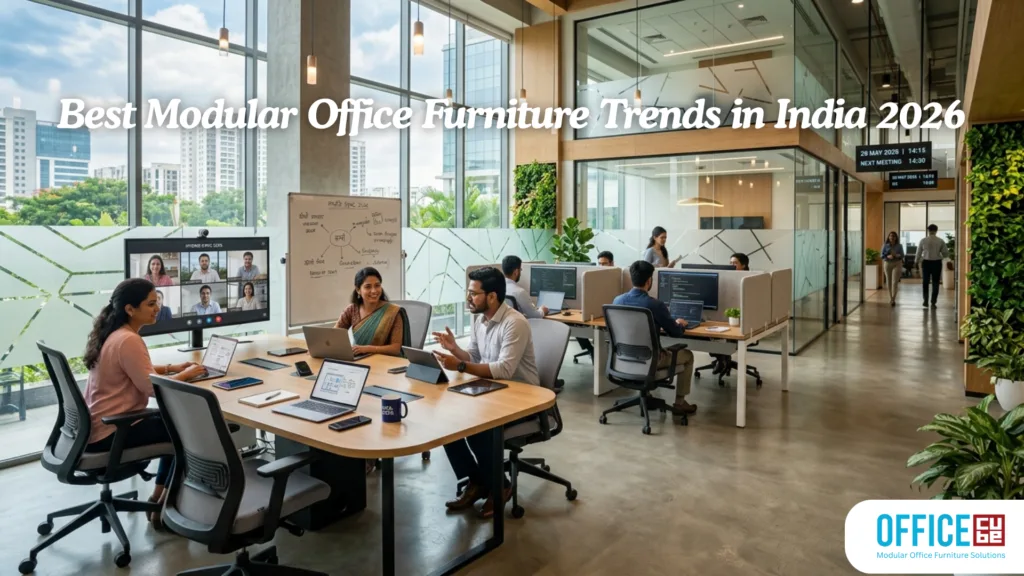
What is Modular Office Furniture? Modular office furniture in India is exactly what it sounds like—furniture built in independent units or “modules” that can be combined, rearranged, or expanded depending on your office needs. Think of it like building blocks for your workspace. Instead of committing to bulky, fixed furniture that becomes obsolete as your team grows, modular systems let you adapt on the fly. In a country like India, where startups scale rapidly and office layouts change frequently, this flexibility isn’t just convenient—it’s essential. The beauty of modular furniture lies in its versatility. You’re not locked into one configuration forever. Need to convert a collaborative workspace into individual desks? Done. Expanding your team from 10 to 30 employees? Just add more modules instead of replacing everything. It’s this adaptability that has made modular furniture a cornerstone of modern office design. From tech startups in Bengaluru to corporate hubs in Gurugram, businesses are increasingly moving toward modular setups. According to industry estimates, the Indian office furniture market is expected to grow at over 7–9% CAGR by 2026, with modular solutions leading the charge. Why? Because companies are no longer designing offices for permanence—they’re designing for change. There’s also a psychological angle here. Modular setups often feel more open, collaborative, and less rigid than traditional office furniture. Employees feel less boxed in, which can subtly boost creativity and productivity. And when your workspace evolves with your needs, it sends a powerful message: this is a company that grows, adapts, and thinks ahead. Key Characteristics of Modular Furniture Modular office furniture stands out because of a few defining traits that make it fundamentally different from traditional setups. First, there’s flexibility—arguably its biggest selling point. Each component can be rearranged without requiring a complete overhaul. This means businesses can experiment with layouts until they find what works best, instead of being stuck with a one-size-fits-all solution. Another key feature is scalability. Imagine starting with a small office of five employees. With modular systems, you can simply add desks, partitions, or storage units as your team grows. There’s no need to discard existing furniture, which reduces both waste and cost over time. This makes modular furniture especially attractive for startups and SMEs in India, where budgets are often tight but growth potential is high. Then comes customization. Modular furniture allows businesses to tailor their office environment according to their brand identity and workflow. Want a vibrant, collaborative space? Or a quiet, focused environment? The same modular components can be configured to suit both. Durability is another underrated advantage. Since modular units are designed for repeated assembly and disassembly, they’re often built with stronger joints and materials. This ensures longevity even with frequent changes. Finally, there’s the ease of installation. Unlike traditional furniture that may require professional carpentry or permanent fixtures, modular systems are relatively simple to install and relocate. This is a huge advantage in cities where office spaces are leased and frequently changed. Evolution of Office Furniture in India Office furniture in India has come a long way from heavy wooden desks and steel cupboards. If you walk into a government office from the early 2000s, you’ll likely see bulky furniture that hasn’t changed in decades. Fast forward to 2026, and the transformation is striking. The shift began with the IT boom in cities like Bengaluru and Hyderabad. As multinational companies set up offices in India, they brought with them global design standards. Open layouts, ergonomic chairs, and modular workstations started replacing traditional setups. Indian companies soon followed suit, realizing that workspace design directly impacts employee productivity and satisfaction. The startup revolution further accelerated this change. Startups needed offices that could evolve quickly without burning through capital. Modular furniture became the obvious choice. It allowed them to scale operations without constantly reinvesting in infrastructure. Another major influence has been the rise of co-working spaces like WeWork, Awfis, and Smartworks. These spaces are designed to accommodate multiple businesses under one roof, which requires highly flexible furniture solutions. Modular systems fit perfectly into this model, reinforcing their popularity. Cultural shifts have also played a role. Younger workforces prefer dynamic, aesthetically pleasing environments over rigid, traditional offices. Companies are responding by investing in furniture that reflects modern values—flexibility, collaboration, and sustainability. Today, modular office furniture isn’t just a trend in India—it’s becoming the standard. And as we move deeper into 2026, its role will only grow stronger. Why Modular Office Furniture is Trending in 2026 The surge in popularity of modular office furniture in India isn’t happening by accident. It’s the result of several overlapping trends that are reshaping how we think about workspaces. If you step into any modern office today, chances are you’ll see modular desks, movable partitions, and flexible seating arrangements. But why now? What’s driving this shift? One of the biggest factors is the changing nature of work itself. Offices are no longer static environments where employees sit at the same desk from 9 to 5. Instead, they’ve become dynamic spaces that need to support collaboration, focus, and everything in between. Modular furniture fits perfectly into this evolving ecosystem because it allows spaces to transform quickly. Another major driver is cost efficiency. Traditional office setups often require significant upfront investment and are difficult to modify later. Modular systems, on the other hand, spread costs over time. Businesses can start small and expand as needed, which is especially important in uncertain economic conditions. There’s also a growing emphasis on employee well-being. Companies are realizing that comfortable, adaptable workspaces lead to happier and more productive employees. Modular furniture supports ergonomic designs and personalized setups, which can significantly improve workplace satisfaction. Sustainability is another piece of the puzzle. As environmental concerns grow, businesses are looking for ways to reduce waste. Modular furniture, with its reusable components, aligns perfectly with this goal. In short, modular office furniture isn’t just a design choice—it’s a strategic decision that aligns with modern business needs. Rise of Hybrid Work Culture The hybrid work model has completely changed how offices

Complete Guide to Modular Office Furniture in India (2026) Read More »