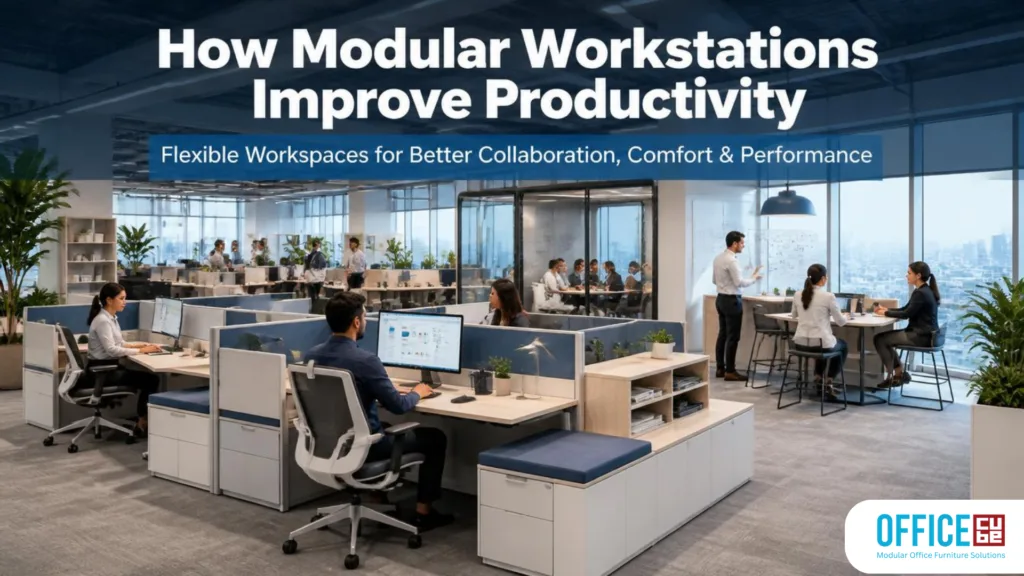
Understanding Modular Workstations
What Are Modular Workstations?
The modern workplace has evolved dramatically over the past decade. Companies are no longer satisfied with rigid office layouts that remain unchanged for years. Instead, organizations are looking for furniture solutions that can adapt to changing team sizes, work styles, and business objectives. This shift has brought modular workstations into the spotlight. A modular workstation is a flexible furniture system designed with interchangeable components that can be rearranged, expanded, or modified according to organizational needs. Unlike traditional office desks that are fixed in place, modular workstations allow businesses to create customized layouts that support productivity, collaboration, and employee comfort.
Think of modular workstations like building blocks. Just as blocks can be rearranged to create different structures, modular office furniture can be configured into various workstation layouts. Whether a company needs collaborative pods, focused work zones, or hybrid team spaces, modular furniture provides the flexibility to make those changes quickly and efficiently. This adaptability is particularly valuable in today’s business environment, where workforce dynamics can change rapidly. As organizations continue embracing flexible work models, modular workstations have become an essential part of workplace design strategies aimed at maximizing productivity and employee satisfaction.
Why Modern Offices Are Adopting Modular Designs
Businesses today operate in an environment that demands agility. Teams grow, projects change direction, and office spaces must adapt without requiring costly renovations. Modular workstations solve this challenge by offering a scalable solution that evolves alongside organizational needs. Recent workplace design trends show increasing demand for furniture that supports flexibility, ergonomic comfort, and efficient space management. Companies are investing in adaptable workspaces because they recognize that employee productivity is closely linked to the environment in which people work.
The rise of hybrid work has further accelerated the adoption of modular office systems. Employees now divide their time between home and office environments, creating new requirements for shared workspaces. Instead of assigning permanent desks, organizations increasingly use modular setups that accommodate different teams on different days. This approach not only improves space utilization but also supports a more dynamic and collaborative workplace culture. As office design becomes more employee-centric, modular workstations continue gaining popularity because they provide the flexibility needed to meet both current and future workplace demands.
The Link Between Workspace Design and Productivity
How Physical Environments Influence Performance
Many business leaders focus heavily on technology, processes, and management practices when discussing productivity. While these factors certainly matter, the physical workspace itself plays a surprisingly significant role in employee performance. Research consistently demonstrates that workplace design influences concentration, collaboration, motivation, and overall job satisfaction. A well-designed workspace can help employees stay focused, reduce stress, and perform tasks more efficiently. In contrast, a poorly designed environment often creates distractions, discomfort, and frustration that negatively impact productivity.
A survey highlighted that 90% of professionals believe a well-designed workspace helps them perform better at work. Workplace design affects everything from communication patterns to employee energy levels. Natural movement, accessibility to colleagues, ergonomic furniture, and noise management all contribute to how effectively people perform their daily tasks. Organizations that invest in thoughtful workspace planning often see measurable improvements in productivity, engagement, and retention. Modular workstations support these goals by creating environments that balance flexibility with functionality, helping employees work more effectively throughout the day.
Productivity Challenges in Traditional Office Layouts
Traditional office layouts often struggle to meet the demands of modern work. Fixed cubicles may provide privacy but can limit collaboration. Open-plan offices encourage communication but frequently introduce distractions that hinder deep focus. Research has shown that noisy environments and frequent interruptions can significantly reduce employee productivity. Many workers report difficulty concentrating in completely open office settings due to constant conversations, phone calls, and visual distractions.
This is where modular workstations provide a practical middle ground. Instead of forcing employees into a one-size-fits-all environment, modular designs allow organizations to create diverse work zones. Employees can access collaborative areas for teamwork and quieter spaces for focused tasks. This balanced approach aligns workspace design with the realities of modern work, where employees frequently switch between individual concentration and team collaboration throughout the day.
Key Ways Modular Workstations Boost Productivity
Enhanced Flexibility and Adaptability
One of the most significant productivity benefits of modular workstations is their flexibility. Business priorities can change quickly, and office environments need to keep pace. Modular furniture allows organizations to reconfigure workspaces without major disruptions or renovation costs. Teams can expand, contract, or reorganize their work areas as projects evolve, ensuring that employees always have a workspace optimized for their current tasks.
This adaptability reduces downtime and improves operational efficiency. Instead of waiting weeks for construction or furniture replacement, companies can modify layouts within hours. Employees benefit from spaces that better support their work activities, while organizations gain the ability to respond quickly to changing business requirements. Flexible environments also encourage innovation because teams can experiment with different workspace configurations to discover what works best for their workflows.
Better Space Utilization
Office real estate represents a substantial expense for most organizations. Maximizing the value of available space is therefore a critical business objective. Modular workstations help companies achieve this goal by optimizing workspace layouts and reducing wasted areas. Because modular systems can be customized to fit specific floor plans, organizations can accommodate more employees without sacrificing comfort or functionality.
The ability to make efficient use of space directly contributes to productivity. Employees can access the resources they need more easily, move through the office more efficiently, and collaborate without unnecessary barriers. Better space utilization also supports organizational growth by allowing businesses to scale their workforce without immediately requiring larger office facilities. This creates a more sustainable and cost-effective workplace strategy while maintaining a productive environment.
Improved Collaboration Without Sacrificing Focus
Collaboration is essential for innovation, problem-solving, and knowledge sharing. At the same time, employees need opportunities for uninterrupted concentration to complete complex tasks. One of the greatest strengths of modular workstations is their ability to support both requirements simultaneously. Organizations can create collaborative hubs, semi-private workstations, and quiet focus areas within the same office environment.
Research indicates that employees value environments that facilitate collaboration while also providing options for focused work. Modular workstation systems make it easier to strike this balance because components can be arranged to support different work styles. Teams can gather for brainstorming sessions and then return to quieter spaces for individual execution. This seamless transition between collaboration and concentration improves overall productivity by ensuring that employees always have access to the most appropriate workspace for their tasks.
Ergonomic Benefits for Employee Well-Being
Employee comfort is often underestimated as a productivity factor. When workers experience physical discomfort, their concentration, energy, and performance suffer. Modular workstations frequently incorporate ergonomic features designed to support healthy posture and reduce strain during long working hours. Ergonomic furniture helps prevent common workplace issues such as back pain, neck tension, and repetitive stress injuries.
Organizations that prioritize ergonomic design often see benefits beyond physical health. Comfortable employees tend to be more engaged, motivated, and productive. Reduced discomfort also contributes to lower absenteeism and improved employee satisfaction. As businesses increasingly recognize the connection between well-being and performance, ergonomic modular workstations have become a key component of modern office design strategies.
Height-Adjustable and Customizable Features
Many modern modular workstations include height-adjustable desks, monitor arms, and customizable storage solutions. These features allow employees to personalize their work environment according to their preferences and physical needs. Personalization can significantly improve comfort because individuals differ in height, posture, and working style. By giving employees greater control over their workspace, organizations create conditions that support sustained productivity and long-term well-being.
Reduced Workplace Distractions
Distractions are one of the biggest obstacles to workplace productivity. Constant interruptions can break concentration and make it difficult for employees to complete complex tasks. Research suggests that poorly designed workplaces contribute significantly to lost productivity and wasted time. Modular workstation systems help address this challenge by incorporating privacy panels, acoustic solutions, and strategically designed layouts that minimize unnecessary interruptions.
Unlike completely open office environments, modular workstations provide a degree of separation while maintaining accessibility. Employees can focus more effectively without feeling isolated from their colleagues. This balance helps organizations create environments where communication remains easy while distractions are reduced. The result is a workplace that supports both productivity and collaboration.
Faster Team Reconfiguration
Modern projects often require cross-functional collaboration between different departments. Modular workstations make it easy to reorganize teams based on project requirements. Instead of being constrained by fixed office layouts, organizations can create temporary team zones that bring relevant employees together. This flexibility accelerates communication, improves coordination, and supports faster decision-making.
Project-based work benefits particularly from modular designs because teams can adapt their workspace to match evolving objectives. When projects conclude, workstations can be reconfigured for new initiatives without significant cost or disruption. This agility helps organizations remain competitive while maintaining a productive and efficient workplace.
Business Benefits Beyond Productivity
Cost Efficiency and Scalability
Modular workstations are not only productivity enhancers but also smart financial investments. Traditional office renovations can be expensive and time-consuming. Modular furniture systems provide a more cost-effective alternative because they can be modified and expanded without requiring complete replacements. Organizations can scale their office environments gradually, aligning furniture investments with business growth.
The long-term financial benefits are substantial. Companies avoid unnecessary renovation expenses, reduce furniture replacement costs, and maximize the lifespan of their office assets. These savings can be reinvested into other productivity-enhancing initiatives, creating additional value for the organization.
Supporting Hybrid and Agile Work Models
Hybrid work has transformed workplace expectations. Employees now require environments that support flexibility, collaboration, and mobility. Modular workstations align perfectly with these requirements because they can accommodate changing occupancy levels and evolving team structures. Businesses can create shared workspaces, touchdown areas, and collaborative zones that support hybrid schedules while maximizing office efficiency.
Agile organizations benefit particularly from modular systems because they allow rapid adaptation to new business needs. Whether implementing new workflows or responding to market changes, companies can adjust their workspace without major disruptions. This capability supports resilience and long-term organizational success.
Creating a Stronger Workplace Culture
Workplace culture is shaped by both people and environment. The physical office plays a significant role in influencing how employees interact, collaborate, and engage with their organization. Recent workplace research highlights the importance of providing a variety of spaces that support focus, collaboration, learning, and social connection. Employees are more likely to feel engaged when their workplace supports these diverse activities.
Modular workstations contribute to a stronger workplace culture by enabling organizations to create environments that reflect their values and priorities. Whether fostering innovation, teamwork, or employee well-being, modular designs provide the flexibility needed to align physical spaces with organizational goals.
Comparing Traditional Desks vs Modular Workstations
Key Differences at a Glance
| Feature | Traditional Workstations | Modular Workstations |
| Flexibility | Limited | High |
| Scalability | Difficult | Easy |
| Space Optimization | Moderate | Excellent |
| Collaboration Support | Limited | Strong |
| Ergonomic Options | Basic | Advanced |
| Reconfiguration Speed | Slow | Fast |
| Hybrid Work Support | Limited | Excellent |
| Long-Term Cost Efficiency | Moderate | High |
The table highlights why businesses increasingly favor modular solutions. They provide greater adaptability, better employee support, and stronger long-term value.
Best Practices for Implementing Modular Workstations
Planning the Right Layout
Successful implementation begins with understanding how employees work. Organizations should analyze workflow patterns, collaboration needs, and space requirements before selecting workstation configurations. Different departments may require different layouts, and a thoughtful planning process ensures that modular systems deliver maximum productivity benefits.
Choosing the Right Furniture Partner
Selecting a reliable furniture partner is equally important. Businesses should prioritize quality, ergonomic design, customization options, and after-sales support. A strong furniture partner helps organizations create workspaces that align with their objectives while ensuring long-term durability and performance.
Future Trends in Modular Office Workstations
The future of office design will likely be defined by flexibility, technology integration, and employee well-being. Modular workstations are expected to incorporate smart features such as integrated power management, occupancy sensors, and enhanced ergonomic adjustments. Organizations will continue prioritizing adaptable environments that support hybrid work and evolving business needs.
As workplace expectations continue changing, modular systems will become even more sophisticated. The focus will remain on creating environments that help employees perform at their best while supporting organizational agility. Companies that embrace these trends will be better positioned to attract talent, improve productivity, and maintain a competitive advantage.
Conclusion
Modular workstations have transformed the way modern offices operate. They provide the flexibility, adaptability, and ergonomic support needed to meet the demands of today’s workforce. By optimizing space utilization, improving collaboration, reducing distractions, and supporting employee well-being, modular workstations create environments where productivity can thrive.
Organizations that invest in modular office solutions gain more than attractive furniture. They gain a strategic tool that enhances performance, supports growth, and prepares the workplace for future challenges. In an era where agility and employee experience are critical competitive advantages, modular workstations offer a practical and effective path toward higher productivity and long-term business success.
FAQs
1. What is a modular workstation?
A modular workstation is a customizable office furniture system made of interchangeable components that can be rearranged, expanded, or modified to suit changing workplace requirements.
2. How do modular workstations improve employee productivity?
They improve productivity by reducing distractions, supporting collaboration, enhancing ergonomics, optimizing space utilization, and adapting to evolving work needs.
3. Are modular workstations suitable for small offices?
Yes. Modular workstations maximize available space and allow businesses to create efficient layouts even in compact office environments.
4. Do modular workstations support hybrid work models?
Absolutely. Their flexibility makes them ideal for shared desks, hot-desking arrangements, and collaborative workspaces commonly used in hybrid offices.
5. Are modular workstations cost-effective?
Yes. They reduce renovation costs, support scalability, and provide long-term value by adapting to changing organizational needs without requiring complete furniture replacement.