
Understanding Height Adjustable Desks
What Is a Height Adjustable Desk?
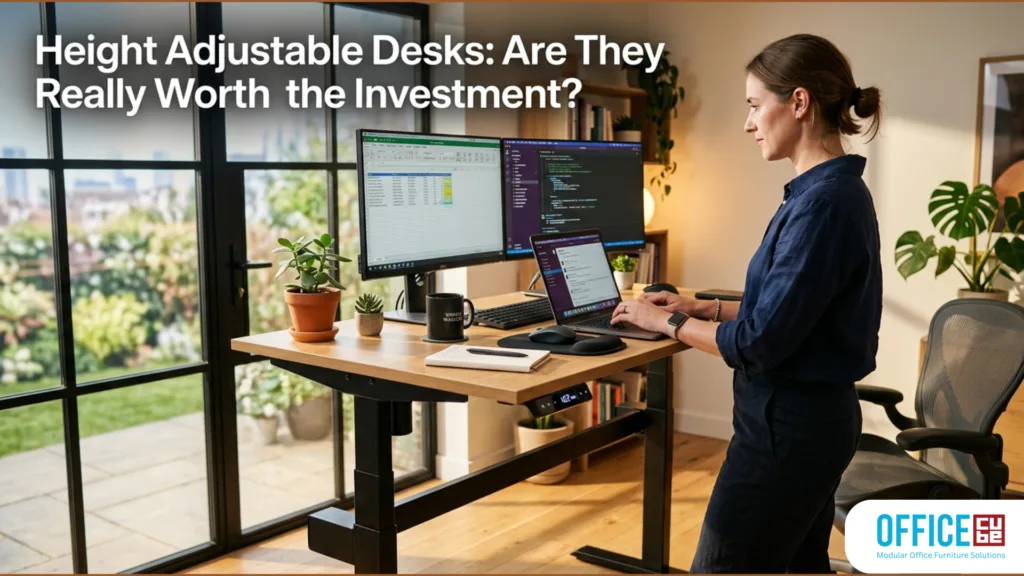
A height adjustable desk, often called a standing desk or sit-stand desk, is exactly what it sounds like-a workstation that allows you to change its height so you can alternate between sitting and standing throughout your day. But that simple definition barely scratches the surface of why these desks have exploded in popularity. Think about your current work setup for a second. How many hours do you spend sitting without moving? If you’re like most people, it’s probably far more than you’d like to admit. That’s where these desks step in, offering flexibility that traditional desks simply can’t match.
Unlike fixed desks that lock you into a single posture, height adjustable desks empower you to move naturally. This shift isn’t just about comfort; it’s about aligning your workspace with how the human body is designed to function. Humans weren’t built to sit still for eight or more hours a day. These desks bridge that gap by encouraging motion, even in small doses, which can have a surprisingly large impact over time.
What makes them even more appealing is how adaptable they are. Whether you’re answering emails, attending virtual meetings, or diving deep into creative work, you can adjust your desk to suit your activity. It’s almost like having multiple workstations in one compact setup. This flexibility is one of the key reasons why people are reconsidering their traditional office furniture and leaning toward more dynamic solutions.
Types of Height Adjustable Desks
When you start exploring height adjustable desks, you quickly realize they’re not all created equal. There are several types, and choosing the right one can feel a bit like picking a new smartphone-each option comes with its own set of features, pros, and trade-offs. Broadly speaking, these desks fall into three main categories: manual, electric, and converter desks.
Manual desks are typically the most affordable option. They rely on hand cranks or simple mechanisms to adjust height. While they get the job done, they can be a bit cumbersome if you’re someone who likes to switch positions frequently throughout the day. Imagine having to pause your workflow just to crank your desk up or down-it’s not exactly seamless, but it works if you’re on a budget.
Electric desks, on the other hand, are where convenience really shines. With the push of a button, you can smoothly transition from sitting to standing in seconds. Many models even come with memory presets, allowing you to save your preferred heights. This ease of use makes electric desks a favorite among professionals who value efficiency and comfort.
Then there are converter desks, which sit on top of your existing desk. These are ideal if you’re not ready to fully commit or if you’re working with limited space. They offer a middle ground, letting you experience the benefits of a standing desk without replacing your entire setup.
The Growing Popularity of Standing Desks
Why More People Are Switching
Walk into any modern office-or even peek into a few home office setups online-and you’ll notice a clear trend: standing desks are everywhere. This isn’t just a passing fad; it’s a response to a growing awareness about how our work habits affect our health and productivity. People are becoming more conscious of the long-term effects of sitting, and they’re actively looking for ways to counteract it.
One of the biggest drivers behind this shift is the increasing amount of research linking prolonged sitting to various health issues. Studies have suggested that excessive sitting can contribute to obesity, cardiovascular disease, and even a shorter lifespan. That’s a pretty strong motivator to rethink how we work, isn’t it? While a height adjustable desk isn’t a magic solution, it’s a step in the right direction.
Another reason for their popularity is the sense of control they offer. Instead of being stuck in one position, you can tailor your work environment to your needs. Feeling sluggish after lunch? Raise your desk and stand for a while. Need to focus on detailed tasks? Lower it and sit comfortably. This flexibility makes work feel less restrictive and more aligned with your natural rhythms.
Workplace Trends and Remote Work Influence
The rise of remote work has played a massive role in the adoption of height adjustable desks. When people started working from home, they quickly realized that their makeshift setups—kitchen tables, couches, or even beds-weren’t sustainable in the long run. This sparked a wave of investment in home office furniture, and standing desks quickly became a top choice.
Employers have also taken notice. Many companies now offer stipends or reimbursements for ergonomic equipment, including height adjustable desks. They understand that a comfortable and healthy employee is often a more productive one. It’s not just about perks anymore; it’s about creating a work environment that supports long-term well-being.
There’s also a cultural shift happening. Work is no longer confined to a rigid 9-to-5 structure in a traditional office. People are blending work and life in new ways, and their workspaces need to reflect that flexibility. A height adjustable desk fits perfectly into this new paradigm, offering adaptability that aligns with modern work habits.
Health Benefits of Height Adjustable Desks
Reducing Sedentary Lifestyle Risks
One of the most compelling reasons people invest in height adjustable desks is the potential health benefit of reducing sedentary behavior. Sitting for extended periods has been compared to smoking in terms of its long-term health risks-an alarming comparison that has grabbed public attention. While that might sound dramatic, it highlights just how serious the issue has become in today’s desk-bound world.
When you use a sit-stand desk, you naturally break up long periods of sitting with standing intervals. This simple change can improve circulation, reduce the risk of metabolic issues, and even help regulate blood sugar levels. It’s not about standing all day-that can come with its own set of problems-but about creating a balance that keeps your body engaged.
Think of it like this: your body thrives on movement. Even small adjustments, like shifting your weight or stretching while standing, can make a difference. Over time, these micro-movements add up, contributing to better overall health. It’s a subtle shift, but one that can have lasting effects.
Impact on Posture and Back Pain
Back pain is one of the most common complaints among office workers, and it’s often tied to poor posture and prolonged sitting. Height adjustable desks can play a significant role in addressing this issue by encouraging better alignment and reducing the strain on your spine. When used correctly, they allow you to maintain a more neutral posture, whether you’re sitting or standing.
However, it’s important to note that simply owning a standing desk isn’t a cure-all. You still need to be mindful of your posture. Standing with poor alignment can be just as problematic as sitting incorrectly. The key is to use the desk as a tool to support good habits, not as a replacement for them.
Many users report a noticeable reduction in back pain after switching to a height adjustable desk. This is often due to the ability to change positions throughout the day, which prevents the stiffness and discomfort that come from staying in one position for too long. It’s a bit like stretching during a long car ride-those small breaks can make a big difference in how you feel.
Productivity and Performance Gains
Do Standing Desks Improve Focus?
Let’s get real for a moment-buying a height adjustable desk isn’t just about looking trendy on Zoom calls. The big question most people quietly ask is: Will this actually help me get more done? And the answer isn’t a simple yes or no-it depends on how you use it. That said, there’s a growing body of evidence suggesting that alternating between sitting and standing can improve focus and cognitive engagement, especially during long work sessions.
When you stand, your body is slightly more active. Your heart rate increases just a bit, your muscles are engaged, and you’re less likely to slip into that sluggish, half-awake state that often creeps in after hours of sitting. It’s like the difference between lounging on a couch and taking a brisk walk-you’re simply more alert. Many users report that standing during tasks like brainstorming, meetings, or reading helps them stay mentally sharp.
There’s also a psychological element at play. Standing can create a subtle sense of urgency and attentiveness. You’re less likely to procrastinate or get distracted when you’re physically upright and engaged with your workspace. It’s almost as if your posture sends a signal to your brain: “Hey, it’s time to work.”
However, it’s important to manage expectations. A standing desk won’t magically turn you into a productivity machine overnight. If your workflow is disorganized or your environment is full of distractions, no desk can fix that. But as part of a well-thought-out setup, it can absolutely give you an edge. Think of it as a tool that supports better habits rather than a shortcut to instant results.
Energy Levels and Daily Output
If you’ve ever hit that mid-afternoon slump where your eyelids feel heavier than your workload, you’re not alone. This is where height adjustable desks can quietly make a noticeable difference. By allowing you to switch positions throughout the day, they help maintain consistent energy levels, which can directly impact your overall output.
Standing periodically encourages blood flow and reduces the feeling of fatigue that often accompanies prolonged sitting. Instead of reaching for another cup of coffee, you can simply raise your desk and let your body wake itself up naturally. It’s a small change, but one that can ripple through your entire day.
Interestingly, a study published by the Texas A&M Health Science Center found that employees using standing desks were up to 46% more productive compared to those who remained seated all day. While results can vary depending on the individual and the nature of the work, this statistic highlights the potential upside.
That said, balance is key. Standing for too long can lead to fatigue, especially if you’re not used to it. The goal isn’t to replace sitting entirely but to create a rhythm-sit, stand, move, repeat. When you find that balance, you’re more likely to maintain steady energy levels from morning to evening, rather than experiencing sharp peaks and crashes.
Potential Drawbacks to Consider
Physical Discomfort and Fatigue
Before you rush to click “buy now” on a sleek new height adjustable desk, it’s worth acknowledging that they’re not without their downsides. One of the most without their downsides. One of the most common complaints is physical discomfort, particularly for those who overdo the standing part. Yes, standing is generally better than sitting all day-but too much of anything can backfire.
Standing for extended periods can lead to sore feet, leg fatigue, and even lower back discomfort if your posture isn’t spot-on. It’s a bit ironic, isn’t it? You invest in a desk to improve your health, only to end up with new aches and pains. This usually happens when people go all-in too quickly, trying to stand for hours without giving their body time to adapt.
The solution is surprisingly simple: ease into it. Start with short standing intervals-maybe 20 to 30 minutes at a time-and gradually increase as your body adjusts. Investing in an anti-fatigue mat and wearing supportive footwear can also make a huge difference.
Another factor to consider is desk ergonomics. If your monitor, keyboard, and mouse aren’t positioned correctly, you could end up straining your neck, shoulders, or wrists. A height adjustable desk is only as effective as the way you use it, so taking the time to set it up properly is essential.
Cost vs. Value Debate
Let’s talk about money, because this is often the biggest sticking point. Height adjustable desks can range anywhere from $150 for basic models to well over $1,000 for premium setups. That’s a significant investment, especially if you’re not entirely sure it will pay off.
Here’s where the debate gets interesting. On one hand, you have the upfront cost, which can feel steep compared to a traditional desk. On the other hand, you have the potential long-term benefits-improved health, better productivity, and possibly even fewer medical expenses related to poor posture or a sedentary lifestyle.
To put things into perspective, consider how much time you spend at your desk. If you work full-time, that’s roughly 2,000 hours a year. Suddenly, the cost of a high-quality desk doesn’t seem quite as intimidating when you break it down per hour of use.
Ultimately, the value depends on your priorities. If you see your workspace as an investment in your health and productivity, the cost may feel justified. If not, it might seem like an unnecessary expense.
Key Features to Look For
Electric vs. Manual Desks
Choosing between electric and manual height adjustable desks is a bit like deciding between a bicycle and a motorcycle-they both get you where you need to go, but the experience is very different. Electric desks offer convenience and ease, while manual desks focus on simplicity and affordability.
Electric desks are ideal for those who frequently switch between sitting and standing. With just a button press, you can adjust the height smoothly and quietly. Many models also include programmable settings, so you can save your preferred heights. This feature might seem minor at first, but it becomes incredibly useful over time.
Manual desks, on the other hand, require physical effort to adjust. While this might not be a dealbreaker for occasional use, it can become tedious if you’re adjusting your desk multiple times a day. That said, they’re generally more affordable and have fewer components that could potentially break.
So, which one should you choose? If convenience and frequency of use matter to you, an electric desk is likely worth the extra cost. If you’re on a tighter budget and don’t mind a bit of manual effort, a manual desk can still get the job done.
Stability, Weight Capacity, and Adjustability
Beyond the basic mechanism, there are a few critical features that can make or break your experience with a height adjustable desk. Stability is one of the most important. A wobbly desk can be incredibly frustrating, especially if you’re typing or using multiple monitors. Look for models with solid construction and good reviews about stability.
Weight capacity is another factor that often gets overlooked. If you’re planning to set up multiple monitors, speakers, or other equipment, you’ll need a desk that can handle the load. Most quality desks clearly list their weight limits, so it’s worth checking before you buy.
Adjustability range is equally important. Not all desks accommodate every height comfortably. Ideally, your desk should allow your elbows to rest at a 90-degree angle whether you’re sitting or standing. This ensures proper ergonomics and reduces strain on your body.
These features might not be the most exciting part of the buying process, but they’re the ones you’ll notice every single day. Choosing wisely here can mean the difference between a desk you love and one you regret.
Cost Breakdown and Budget Considerations
Entry-Level vs. Premium Models
When diving into the world of height adjustable desks, the price spectrum can feel a bit overwhelming. Entry-level models are tempting-they’re affordable and often marketed as “good enough.” And for some people, they are. If you’re just testing the waters or setting up a temporary workspace, a basic desk might meet your needs.
However, there’s usually a noticeable difference when you step into the premium range. Higher-end desks often offer better build quality, smoother adjustments, quieter motors, and additional features like cable management and memory presets. It’s the kind of upgrade you might not think you need-until you experience it.
Think of it like buying a mattress. You can go cheap, but since you’ll be using it every day, investing in quality can significantly impact your comfort and well-being. The same logic applies here.
Long-Term ROI Analysis
So, are height adjustable desks worth the investment in the long run? This is where things get interesting. The return on investment isn’t just financial-it’s also physical and mental. Improved posture, reduced discomfort, and increased productivity all contribute to a better overall work experience.
If you’re someone who spends hours at a desk every day, the benefits can add up quickly. Even small improvements in comfort and efficiency can make a big difference over time. It’s not about immediate gains but about creating a sustainable work environment that supports your health and performance.
At the end of the day, the value of a height adjustable desk comes down to how much you use it and how well it fits into your routine. Used right, it can be one of the most impactful upgrades you make to your workspace.
Are Height Adjustable Desks Worth It for You?
Best Use Cases and User Profiles
Not everyone needs a height adjustable desk, and pretending otherwise would be misleading. These desks tend to deliver the most value for people who spend long hours working at a computer-think remote workers, office professionals, designers, developers, and even students tackling heavy workloads. If your day revolves around a screen, the ability to shift positions can genuinely reshape how you feel by the end of it.
They’re also particularly useful for individuals dealing with mild back discomfort or posture-related issues. Being able to alternate between sitting and standing gives your body a break from repetitive strain. It’s not a medical treatment, but it can be a practical part of a healthier routine.
On the flip side, if your work already involves a lot of movement-like retail, healthcare, or fieldwork-you might not see the same level of benefit. In those cases, adding more standing time isn’t necessarily helpful.
Final Verdict and Recommendations
So, are height adjustable desks worth it? For many people, the answer is yes-but with a caveat. They’re not a magic fix, and they won’t transform your health or productivity overnight. What they offer is flexibility, and that flexibility can lead to meaningful improvements when used thoughtfully.
If you approach it with realistic expectations, invest in a quality model, and take the time to set it up correctly, a height adjustable desk can become a valuable part of your daily routine. It’s less about the desk itself and more about how it encourages you to move, adjust, and stay engaged throughout your day.
Conclusion
Height adjustable desks sit at the intersection of health, productivity, and modern work culture. They reflect a broader shift toward more dynamic and adaptable work environments, where comfort and well-being are no longer afterthoughts. While they come with costs and a learning curve, their potential benefits make them a compelling option for many.
The real question isn’t just whether they’re worth the investment—it’s whether you’re ready to change how you work. Because at the end of the day, the desk is just a tool. How you use it is what truly matters.
FAQs
1. How long should I stand at a height adjustable desk?
A good starting point is a 1:1 or 2:1 ratio of sitting to standing. For example, sit for 30–60 minutes, then stand for 15–30 minutes. Adjust based on comfort.
2. Can standing desks help with weight loss?
They can contribute slightly by increasing calorie burn, but they’re not a substitute for regular exercise or a healthy diet.
3. Are height adjustable desks suitable for small spaces?
Yes, especially converter desks or compact electric models designed for home offices.
4. Do I need an anti-fatigue mat?
It’s not mandatory, but it’s highly recommended if you plan to stand for extended periods. It reduces strain on your feet and legs.
5. Are expensive standing desks really better?
Not always, but higher-priced models often offer better stability, durability, and features that enhance daily use.