
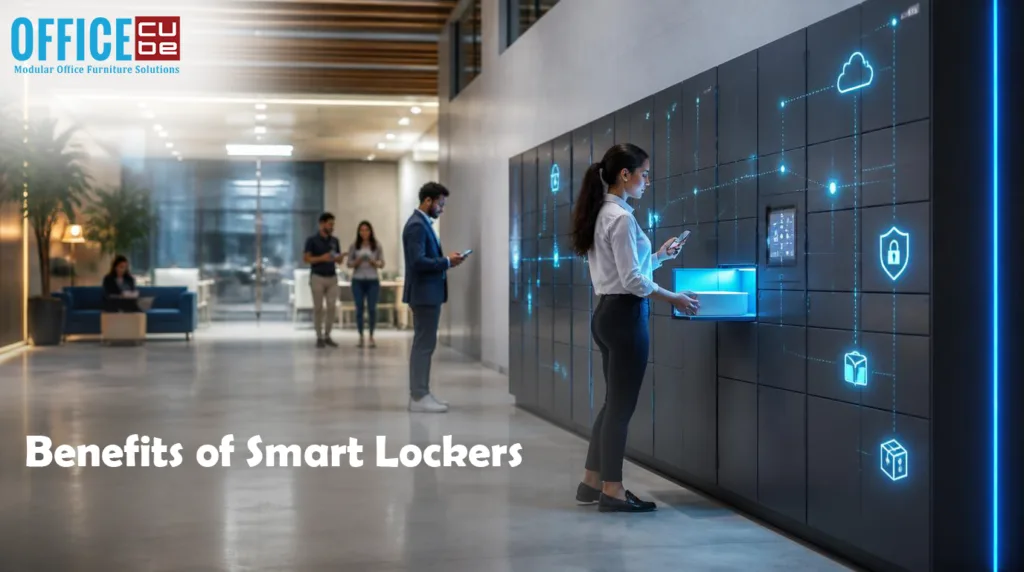
Understanding Smart Lockers
Smart lockers have rapidly transformed the way organizations manage storage, deliveries, equipment distribution, and personal belongings. Unlike traditional lockers that rely on physical keys or mechanical combination locks, smart lockers integrate digital technologies such as cloud-based software, mobile applications, QR codes, PIN authentication, RFID cards, and biometric verification to provide secure, automated, and highly efficient access. As businesses continue embracing digital transformation, these intelligent storage systems have become valuable assets across offices, schools, hospitals, retail stores, warehouses, residential buildings, universities, and logistics centers.
The growing demand for contactless services, secure package management, and operational efficiency has accelerated the adoption of smart locker technology worldwide. According to multiple industry research reports, the global smart locker market is projected to experience significant annual growth over the coming years, driven by booming e-commerce, hybrid workplaces, and increasing automation across industries. Organizations are no longer looking at lockers simply as storage cabinets—they view them as connected infrastructure capable of improving security, reducing administrative workloads, and enhancing customer satisfaction.
Smart lockers also solve many long-standing challenges associated with traditional storage systems. Lost keys, unauthorized access, manual record-keeping, and limited accountability become far less problematic when every transaction is digitally recorded. Administrators gain complete visibility into locker usage through centralized dashboards, while users enjoy the convenience of retrieving items whenever they need them. Whether it’s an employee collecting company equipment, a student storing valuables, or a customer picking up an online purchase, smart lockers simplify the process while maintaining high levels of security.
Perhaps one of the greatest advantages lies in flexibility. Modern smart locker platforms can be customized to meet the unique needs of virtually any organization, integrating seamlessly with existing software systems such as access control, employee directories, inventory management, and e-commerce platforms. This adaptability makes smart lockers an increasingly attractive investment for organizations seeking scalable, future-ready storage solutions.
What Are Smart Lockers?
Smart lockers are electronically controlled storage units connected to management software that automates access, tracking, and administration. Instead of relying solely on traditional locks and keys, these lockers use digital authentication methods to grant secure access to authorized users. Depending on the system, authentication may occur through PIN codes, QR codes, mobile apps, RFID badges, NFC technology, biometric scanners, or even facial recognition.
Each locker communicates with centralized software that records every interaction, including who accessed the locker, when it was opened, how long it remained occupied, and when it became available again. This digital audit trail dramatically improves accountability while minimizing opportunities for unauthorized access. Organizations can remotely assign lockers, monitor occupancy, generate usage reports, and receive maintenance alerts without physically inspecting every unit.
Modern smart lockers are available in numerous configurations to suit different applications. Package lockers facilitate secure parcel collection for apartment complexes and retailers. Employee lockers securely store laptops, uniforms, and personal belongings. Asset management lockers distribute expensive tools and electronic equipment while maintaining detailed usage records. Temperature-controlled smart lockers preserve pharmaceuticals, groceries, laboratory samples, and food deliveries. Educational institutions utilize lockers for student storage, while hospitals deploy them to securely distribute medications and medical supplies.
The hardware itself is designed for durability and long-term use, often incorporating steel construction, electronic locking mechanisms, integrated touchscreens, LED indicators, and network connectivity through Wi-Fi, Ethernet, or cellular networks. Combined with cloud-based management software, these features create an intelligent ecosystem that enhances both security and operational efficiency.
How Smart Locker Systems Work
A smart locker system follows a straightforward yet highly sophisticated workflow that eliminates much of the manual effort associated with traditional storage. Administrators first assign a locker to a specific user or configure lockers for dynamic allocation, where the system automatically assigns an available compartment whenever one is needed. Users receive secure access credentials via email, SMS, mobile applications, QR codes, or PIN codes.
Upon arriving at the locker, the user authenticates using the designated method. The software verifies authorization almost instantly and unlocks the assigned compartment electronically. Every action is automatically recorded, creating a comprehensive digital log for future reference. Once the locker is closed, its status updates immediately within the management dashboard, allowing administrators to monitor occupancy in real time.
Cloud connectivity enables remote management from virtually anywhere. Facility managers can release occupied lockers, modify permissions, monitor maintenance requirements, and generate analytical reports without visiting the locker location. Integration with identity management systems further streamlines administration by automatically updating user permissions whenever employee or student records change.
Advanced systems incorporate notifications that alert users when deliveries arrive, remind them to collect stored items, or inform administrators about prolonged occupancy. Analytics provide valuable insights into utilization rates, peak usage periods, maintenance schedules, and capacity planning. These capabilities transform smart lockers into data-driven operational tools rather than simple storage units.
Why Smart Lockers Are Becoming Essential
Organizations across nearly every industry are facing increasing pressure to operate more efficiently while delivering better experiences for employees, customers, and visitors. Smart lockers have emerged as a practical solution because they address several business challenges simultaneously. They improve security, automate repetitive processes, reduce administrative workloads, and provide users with convenient self-service access around the clock. As workplaces become more flexible and e-commerce continues to grow, traditional locker systems often struggle to meet modern expectations.
One major driver behind the popularity of smart lockers is the rise of hybrid work environments. Employees no longer occupy the same desk every day, making permanent storage less practical. Smart lockers allow organizations to assign storage dynamically, ensuring lockers are available only when needed. This improves space utilization and helps companies maximize office real estate without compromising convenience.
Another significant factor is the rapid expansion of online shopping. Consumers increasingly expect fast, flexible, and contactless pickup options. Retailers and logistics companies use smart lockers to streamline package collection, reduce delivery failures, and shorten wait times. Customers appreciate being able to retrieve purchases whenever it suits their schedules instead of waiting for home deliveries or standing in customer service lines.
Healthcare facilities, universities, manufacturing plants, and government organizations are also embracing smart locker technology. Hospitals use them to securely distribute medical supplies, while manufacturers rely on them for controlled tool management. Universities benefit from automated package distribution and student storage, and government agencies use secure lockers for document exchange and evidence management. These diverse applications demonstrate that smart lockers are no longer a niche technology—they have become an essential component of modern infrastructure.
Growth of Automated Storage Solutions
Automation has become one of the defining trends of modern business operations, and storage management is no exception. Organizations increasingly seek technologies that eliminate repetitive manual tasks while improving accuracy and accountability. Smart lockers fit perfectly into this transformation because they automate everything from locker assignments and access permissions to notifications and reporting.
Businesses that once relied on receptionists, warehouse staff, or security personnel to distribute equipment or packages can now allow employees and customers to serve themselves securely. This shift not only reduces labor costs but also enables staff to focus on higher-value responsibilities. Automated notifications inform users when items are ready for pickup, while administrators can remotely manage lockers from centralized dashboards without physically inspecting each location.
The continued growth of cloud computing has also fueled smart locker adoption. Cloud-connected systems receive software updates automatically, integrate with existing enterprise platforms, and provide real-time visibility across multiple facilities. Organizations operating dozens or even hundreds of locations can manage every locker through a single interface, making large-scale deployments much easier than traditional locker systems.
Data analytics adds another layer of value. Administrators can identify underutilized lockers, monitor peak usage periods, forecast future capacity needs, and optimize resource allocation. Rather than relying on assumptions, decision-makers gain actionable insights backed by real operational data. This combination of automation, connectivity, and analytics explains why smart lockers have become an increasingly attractive investment for organizations focused on digital transformation.
Industries Driving Smart Locker Adoption
Smart lockers have proven remarkably versatile, leading to widespread adoption across numerous industries. Each sector benefits in different ways depending on its operational needs, security requirements, and customer expectations.
Retailers use smart lockers to enable click-and-collect services, allowing shoppers to retrieve purchases at their convenience. This reduces congestion inside stores while providing a seamless shopping experience. Logistics companies deploy package lockers to improve last-mile delivery efficiency and reduce failed delivery attempts.
Corporate offices increasingly install employee lockers that support flexible seating arrangements and hybrid work policies. Staff members can securely store laptops, documents, and personal belongings without needing permanently assigned storage.
Healthcare organizations rely on smart lockers for controlled access to medications, laboratory samples, surgical instruments, and personal protective equipment. Digital tracking improves compliance while ensuring only authorized personnel gain access.
Educational institutions benefit from automated package management, student storage, and equipment lending. Universities handling thousands of students appreciate the efficiency gains that come from reducing manual distribution processes.
Manufacturing facilities use smart lockers to manage expensive tools, safety equipment, replacement parts, and handheld devices. Every transaction is recorded, improving accountability and minimizing equipment loss. Government agencies, residential buildings, libraries, airports, hotels, and sports facilities have also embraced smart locker technology to improve both operational efficiency and user satisfaction.
Top Benefits of Smart Lockers
Smart lockers deliver advantages that extend far beyond secure storage. They create measurable improvements in productivity, customer satisfaction, operational transparency, and long-term cost efficiency. Whether deployed in a small office or across a multinational enterprise, these systems consistently provide value by replacing manual processes with intelligent automation.
Organizations often discover that the return on investment comes from multiple areas simultaneously. Labor savings, reduced losses, improved security, faster service delivery, and better utilization of physical space all contribute to the overall business case. Employees appreciate the convenience of self-service access, while administrators benefit from comprehensive visibility and centralized control.
Another important benefit is scalability. As organizations grow, smart locker systems can expand without requiring major infrastructure changes. Additional locker banks, software licenses, and integrations can typically be added with minimal disruption, allowing businesses to adapt to changing operational needs over time.
Perhaps most importantly, smart lockers support modern expectations for speed, flexibility, and convenience. Today’s users expect digital experiences that are intuitive, available around the clock, and accessible from mobile devices. Smart lockers meet these expectations while maintaining robust security and administrative oversight.
Enhanced Security
Security is one of the strongest reasons organizations invest in smart locker technology. Traditional lockers depend on physical keys or combination locks, both of which present significant vulnerabilities. Keys can be lost, duplicated, or stolen, while combinations may be shared without authorization. Smart lockers eliminate many of these risks through digital authentication methods that provide greater control over who can access each compartment.
Modern systems support multiple authentication options, including PIN codes, RFID cards, mobile credentials, biometric verification, QR codes, and multi-factor authentication. Administrators can instantly grant or revoke access permissions without replacing locks or distributing new keys. This flexibility is especially valuable in organizations with frequent employee turnover or temporary visitors.
Every access event is automatically recorded in an electronic audit log. Administrators know exactly who opened a locker, when access occurred, and how long the locker remained occupied. These records strengthen accountability, simplify investigations, and support regulatory compliance in industries such as healthcare, finance, and government.
Many systems also include automatic alerts for unauthorized access attempts, doors left open, or hardware malfunctions. Remote monitoring allows administrators to respond quickly without needing to inspect lockers manually. Combined with durable construction and encrypted communications, these features provide a level of protection that traditional locker systems simply cannot match.
Real-Time Monitoring and Access Control
One of the defining characteristics of smart locker technology is its ability to provide real-time visibility into locker activity. Through centralized management software, administrators can monitor occupancy, assign lockers, revoke permissions, and review detailed access histories from virtually anywhere with an internet connection.
Real-time monitoring is particularly valuable for organizations managing high-value assets. If a laptop, medical device, or specialized tool is checked out, managers immediately know who accessed it and when it should be returned. Automated reminders reduce overdue returns while ensuring critical equipment remains available for others.
Access control policies can also be customized to meet organizational requirements. Some users may receive permanent locker assignments, while others receive temporary access based on schedules, projects, or reservations. Time-based permissions ensure lockers unlock only during approved hours, adding another layer of protection.
Integration with corporate identity systems further streamlines administration. When an employee joins, changes roles, or leaves the organization, locker permissions can be updated automatically without manual intervention. This reduces administrative workload while minimizing security risks associated with outdated access privileges.
Improved Operational Efficiency
Organizations constantly look for ways to accomplish more with fewer resources, and smart lockers play a significant role in achieving that goal. Traditional storage systems often require manual administration, including issuing keys, maintaining paper logs, tracking locker assignments, and responding to lost key requests. These seemingly small tasks consume valuable employee time and increase the likelihood of human error. Smart lockers automate these processes, enabling staff to focus on higher-value responsibilities rather than routine administrative work.
For businesses that manage equipment, documents, packages, or inventory, automation significantly accelerates day-to-day operations. Employees no longer need to wait for a supervisor or receptionist to unlock storage areas or distribute assets. Instead, authorized users receive secure digital credentials that allow them to retrieve items independently whenever necessary. This self-service model reduces waiting times and eliminates bottlenecks during busy periods.
Centralized management software further enhances efficiency by providing administrators with real-time visibility into locker availability, occupancy, and maintenance needs. Instead of physically inspecting lockers across multiple locations, facility managers can monitor the entire system through a single dashboard. Reports highlighting utilization rates, turnover, and user activity help organizations optimize storage capacity and identify opportunities for improvement.
Operational efficiency also extends to onboarding and offboarding employees. New hires can be assigned lockers instantly through the management platform, while departing employees’ access permissions can be revoked immediately without replacing locks or collecting physical keys. These streamlined workflows reduce administrative overhead while maintaining strong security controls. As organizations continue adopting digital workplace solutions, smart lockers become an integral part of creating faster, more efficient operations.
Automation Reduces Manual Tasks
Automation is one of the most valuable features of smart locker systems because it removes repetitive tasks that previously required continuous human involvement. In traditional environments, employees often spend hours assigning lockers, updating spreadsheets, responding to access requests, and locating misplaced keys. Smart lockers replace these manual activities with software-driven workflows that operate automatically.
When a package arrives, for example, staff simply place it inside an available locker. The system immediately sends the recipient a secure notification containing pickup instructions and an access code or QR code. Once the package is collected, the locker automatically becomes available for the next delivery without requiring administrative intervention. This seamless process dramatically improves productivity, particularly in high-volume environments such as universities, residential buildings, and corporate offices.
Asset management also becomes more efficient through automation. Companies can configure lockers to issue laptops, tablets, handheld scanners, power tools, or protective equipment only to authorized users. Every checkout and return is automatically logged, creating accurate records without requiring employees to complete paper forms or manual sign-out sheets.
Maintenance tasks benefit from automation as well. Smart locker systems can notify administrators when batteries require replacement, doors experience mechanical issues, or software updates become available. Preventive maintenance helps minimize downtime while ensuring users continue receiving reliable service. Over time, these automated capabilities contribute to significant labor savings and improved operational consistency across the organization.
Contactless Convenience
The demand for contactless services has grown dramatically in recent years, and smart lockers provide one of the most practical solutions for secure, self-service access. Whether collecting online purchases, receiving workplace equipment, or retrieving personal belongings, users appreciate being able to complete the process independently without interacting with staff or waiting in line.
Smart lockers support multiple contactless authentication methods, including mobile applications, QR codes, NFC technology, RFID cards, and digital PINs. These options eliminate the need to exchange physical keys or paperwork while providing fast and secure access. Users simply authenticate themselves, retrieve their items, and continue with their day in a matter of seconds.
This convenience is particularly valuable for organizations operating outside traditional business hours. Since smart lockers can be accessed 24/7, customers and employees enjoy greater flexibility. Retail customers can pick up purchases after work, employees can retrieve equipment before early shifts, and residents can collect deliveries whenever it suits their schedules. Around-the-clock accessibility enhances user satisfaction while reducing pressure on customer service teams.
Contactless workflows also improve hygiene by minimizing shared touchpoints and reducing unnecessary person-to-person interactions. Although health considerations initially accelerated the adoption of contactless technologies, the convenience they provide has ensured their continued popularity. Organizations that implement smart lockers often find that users quickly adapt to the intuitive digital experience and come to expect the same level of convenience across other services.
Better Customer Experience
Customer expectations continue to evolve, with speed, convenience, and reliability becoming key factors in determining satisfaction. Smart lockers help businesses meet these expectations by providing a seamless, user-friendly experience that minimizes waiting times and gives customers greater control over when and how they collect their items.
Retail businesses, for instance, use smart lockers to support buy-online-pick-up-in-store (BOPIS) services. Instead of waiting for assistance from store associates, customers receive a notification when their order is ready and can retrieve it directly from a designated locker. This process shortens pickup times, reduces in-store congestion, and creates a more enjoyable shopping experience.
Apartment complexes and residential communities also benefit from improved package management. Residents receive instant notifications when deliveries arrive and can collect parcels securely at their convenience. This reduces the risk of lost or stolen packages while eliminating the need for building staff to manage overflowing mailrooms.
Businesses gain valuable customer insights through locker management software, which tracks pickup times, delivery performance, and system utilization. These analytics help organizations identify opportunities to improve service quality and optimize operations. A consistently positive customer experience strengthens brand reputation, encourages repeat business, and increases customer loyalty. In competitive markets, these advantages can become important differentiators that contribute to long-term success.
Cost Savings and Return on Investment (ROI)
While implementing a smart locker system requires an initial investment, the long-term financial benefits often outweigh the upfront costs. Organizations achieve savings through reduced labor requirements, improved asset utilization, lower replacement costs, and increased operational efficiency. Over time, these savings contribute to a compelling return on investment.
One of the most immediate financial benefits comes from automation. Administrative staff spend less time managing keys, assigning lockers, processing deliveries, and responding to access requests. Labor hours that were previously dedicated to routine tasks can be redirected toward more strategic activities that generate greater business value.
Smart lockers also help reduce losses associated with misplaced equipment, stolen assets, and unclaimed packages. Because every transaction is digitally recorded, accountability increases significantly. Employees are more likely to return borrowed equipment on time, and administrators can quickly identify missing items through detailed audit trails.
Improved space utilization generates additional cost savings. Dynamic locker assignment allows multiple users to share the same pool of lockers rather than requiring permanently assigned storage for every individual. This reduces the total number of lockers needed while maximizing available office space. Organizations expanding into new locations may avoid costly renovations by making better use of existing facilities.
When evaluating return on investment, businesses should consider both direct and indirect benefits. Reduced labor costs, fewer lost assets, increased customer satisfaction, stronger security, and improved productivity all contribute to measurable value over the system’s lifespan. For many organizations, smart lockers become a strategic investment that continues delivering operational and financial benefits for years.
Sustainability and Paperless Operations
Sustainability has become a strategic priority for organizations worldwide, and smart lockers contribute meaningfully to environmental goals by reducing paper consumption, optimizing resource usage, and supporting more efficient logistics. While traditional locker systems often rely on printed forms, paper logs, physical keys, and manual documentation, smart lockers replace these processes with digital workflows that are both environmentally friendly and operationally efficient.
One of the most immediate environmental benefits is the elimination of paper-based recordkeeping. Every locker assignment, package delivery, equipment checkout, and return is recorded electronically. Notifications are sent via email, SMS, or mobile apps instead of printed slips, reducing paper waste while ensuring users receive information instantly. Over months and years, these small changes can result in a substantial reduction in paper consumption, particularly in organizations managing thousands of transactions each month.
Smart lockers also improve delivery efficiency. Centralized package pickup locations reduce repeated delivery attempts, one of the major contributors to unnecessary transportation emissions. Couriers can deliver multiple packages in a single stop rather than making repeated trips to individual recipients who may not be available. This streamlined approach lowers fuel consumption, reduces traffic congestion, and supports broader sustainability initiatives.
Efficient space utilization provides another environmental advantage. Dynamic locker allocation means fewer lockers are needed to serve the same number of users, reducing material requirements during installation and making better use of existing facilities. Organizations also gain valuable data on locker usage, helping them optimize resources instead of purchasing excess equipment.
Many manufacturers are also designing smart locker systems with energy-efficient electronics, LED indicators, and durable components built for long service lives. Combined with cloud-based software updates that extend system functionality without requiring hardware replacement, these features contribute to a more sustainable lifecycle. For organizations pursuing environmental certifications or corporate sustainability goals, smart lockers represent a practical technology that supports both operational excellence and responsible resource management.
Choosing the Right Smart Locker Solution
Selecting the right smart locker system requires more than comparing prices. Organizations should carefully evaluate their operational needs, expected usage, security requirements, and future growth plans before making an investment. A well-chosen solution not only solves today’s challenges but also adapts as business requirements evolve.
The first consideration is the intended application. A retail package pickup system differs significantly from a hospital medication locker or a manufacturing asset management solution. Identifying the primary use case helps determine the appropriate locker size, software capabilities, authentication methods, and reporting features. Businesses should also estimate future demand to ensure the chosen system can scale without requiring a complete replacement.
Integration capabilities are equally important. Modern smart lockers should work seamlessly with existing systems such as employee directories, access control platforms, inventory management software, e-commerce platforms, or enterprise resource planning (ERP) systems. Smooth integration minimizes manual data entry and creates a more unified operational workflow.
Reliability and vendor support should not be overlooked. Organizations depend on smart lockers for critical daily operations, making responsive technical support and regular software updates essential. Evaluating the vendor’s reputation, warranty coverage, and maintenance services can help ensure long-term success.
Security remains another crucial factor. Businesses should look for encrypted communications, robust authentication methods, comprehensive audit logs, and role-based administrative controls. These features help protect sensitive information while ensuring compliance with industry regulations.
Ultimately, the ideal smart locker solution balances functionality, scalability, security, ease of use, and total cost of ownership. Taking time to evaluate these factors carefully will maximize the return on investment and ensure the system continues delivering value well into the future.
Features to Look For
When comparing smart locker solutions, organizations should prioritize features that directly support their operational objectives. While different industries have unique requirements, several capabilities consistently provide significant value across nearly every deployment.
Key features include:
| Feature | Benefit |
|---|---|
| Cloud-based management | Remote administration from anywhere |
| Mobile app access | Convenient, contactless user experience |
| Multiple authentication methods | Enhanced security and user flexibility |
| Real-time monitoring | Instant visibility into locker activity |
| Automated notifications | Faster package pickups and equipment returns |
| Detailed audit trails | Improved accountability and compliance |
| API integrations | Seamless connectivity with existing business systems |
| Analytics and reporting | Data-driven operational improvements |
| Role-based permissions | Better administrative control |
| Scalable architecture | Supports future organizational growth |
Beyond technical specifications, user experience should remain a top priority. A system that is intuitive for both administrators and end users will achieve higher adoption rates and require less training. Clear interfaces, responsive software, and reliable performance all contribute to long-term success.
Organizations should also evaluate customization options. Some businesses may require branded interfaces, multilingual support, specialized locker sizes, or temperature-controlled compartments. Choosing a flexible platform ensures the system can accommodate evolving operational needs without extensive modifications.
Conclusion
Smart lockers have evolved far beyond simple storage cabinets. They are now intelligent, connected systems that enhance security, streamline operations, improve customer experiences, and support digital transformation across countless industries. By replacing manual processes with automated workflows, organizations can reduce administrative burdens, strengthen accountability, and provide users with fast, convenient, and secure self-service access.
From retail stores and corporate offices to hospitals, universities, manufacturing facilities, and residential communities, smart lockers continue to demonstrate their value through improved efficiency and measurable cost savings. Features such as real-time monitoring, cloud-based management, contactless access, comprehensive audit trails, and seamless software integration make them an increasingly attractive investment for organizations seeking modern infrastructure.
As technology continues to advance, smart lockers are likely to become even more intelligent through the integration of artificial intelligence, predictive analytics, and Internet of Things (IoT) capabilities. These innovations will further improve asset management, maintenance planning, and user experiences while supporting sustainable and data-driven operations.
Organizations that invest in smart locker solutions today position themselves to meet evolving customer expectations, strengthen operational resilience, and build more efficient workplaces for the future. Whether the objective is enhancing security, optimizing logistics, reducing costs, or improving convenience, smart lockers offer a scalable solution that delivers long-term value.
Frequently Asked Questions (FAQs)
1. What is a smart locker?
A smart locker is a digitally controlled storage unit that uses technologies such as PIN codes, QR codes, RFID cards, mobile apps, or biometrics to provide secure and automated access while recording every transaction electronically.
2. Which industries benefit most from smart lockers?
Smart lockers are widely used in retail, healthcare, logistics, education, corporate offices, manufacturing, residential buildings, government agencies, airports, hotels, and libraries.
3. Are smart lockers more secure than traditional lockers?
Yes. Smart lockers offer advanced authentication methods, encrypted communications, detailed audit logs, remote access management, and real-time monitoring, making them significantly more secure than conventional key-based lockers.
4. Can smart lockers integrate with existing business systems?
Most modern smart locker platforms support integration with access control systems, HR software, inventory management platforms, ERP systems, e-commerce platforms, and other enterprise applications through APIs or built-in connectors.
5. Are smart lockers worth the investment?
For many organizations, the answer is yes. The combination of labor savings, improved security, reduced asset loss, enhanced customer satisfaction, better space utilization, and streamlined operations often delivers a strong return on investment over the system’s lifetime.