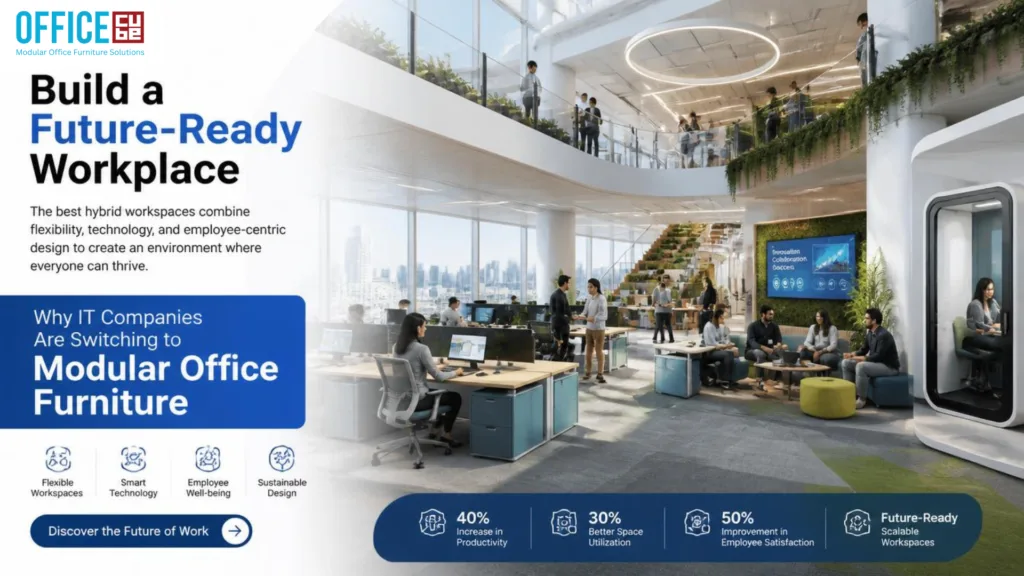
The modern IT workplace looks very different from what it did a decade ago. Rows of fixed desks and enclosed cubicles are gradually being replaced by agile, collaborative environments that support both in-office and hybrid employees. As technology companies continue to scale rapidly, traditional furniture often becomes a limitation rather than an asset. This shift has fueled the demand for modular office furniture, which offers flexibility, adaptability, and long-term value.
Recent workplace studies indicate that hybrid work remains a dominant model across the technology sector. A Nasscom study cited in industry reports found that nearly 78% of Indian IT companies have adopted hybrid work arrangements, making flexible workspace design a business necessity. Companies need furniture that can quickly adapt to changing team sizes, project requirements, and collaboration styles.
The rise of Global Capability Centers (GCCs) in India is also driving the demand for adaptable office environments. India’s flexible office market recently crossed 100 million square feet, demonstrating the growing need for dynamic workplaces that can evolve with business demands.
For IT organizations, modular furniture is no longer just an aesthetic choice. It has become a strategic investment that supports productivity, employee satisfaction, and operational efficiency. Whether it’s a startup with 20 developers or an enterprise technology company with thousands of employees, modular furniture creates a workplace that can evolve without expensive renovations.
The Rise of Hybrid Workspaces
Hybrid work has permanently changed office planning. Employees now divide their time between home and office, making assigned seating less relevant than it once was. IT companies increasingly prefer activity-based workspaces where employees choose areas based on the tasks they need to complete.
Modular furniture supports this concept by allowing offices to create different zones. Teams can use collaborative areas for brainstorming sessions, quiet pods for focused coding, and flexible meeting spaces for client discussions. Instead of redesigning the office every few years, organizations can simply reconfigure existing furniture.
Growing Demand for Flexible Office Layouts
Technology companies experience constant change. Development teams expand, departments merge, and project requirements evolve. Fixed furniture systems often struggle to accommodate these shifts efficiently.
Modular office solutions allow managers to rearrange workstations, add storage units, and create collaborative zones without disrupting operations. This adaptability makes modular furniture particularly attractive for IT businesses operating in fast-paced environments.
What Makes Modular Office Furniture Ideal for IT Offices
IT companies require workspaces that balance productivity, collaboration, comfort, and technology integration. Modular furniture excels because it addresses all these requirements simultaneously. Unlike traditional office furniture, modular systems are designed to evolve with the workplace.
Technology professionals spend extended hours working on computers, attending virtual meetings, and collaborating on projects. Therefore, furniture must support employee well-being while maintaining functionality. Ergonomic design, cable management, and workspace flexibility become critical considerations.
Many modern modular furniture systems now include integrated charging ports, cable management solutions, and technology-friendly layouts. Smart desks and connected workstations are increasingly becoming standard features in modern IT offices.
Perhaps the biggest advantage is scalability. As IT organizations grow, they can easily expand modular systems without replacing existing furniture. This significantly reduces long-term costs while maintaining a consistent office design.
Scalability for Fast-Growing Teams
Growth is common in the IT sector. A startup can double its workforce within months, while established companies frequently restructure departments. Modular furniture allows businesses to add workstations and storage units as needed without major investments.
Improved Employee Productivity
Comfort directly influences performance. Employees who work in ergonomic, well-organized environments experience less fatigue and greater focus. Adjustable desks, ergonomic chairs, and personalized workstations help create a more productive workforce.
Essential Types of Modular Office Furniture for IT Companies
Choosing the right furniture starts with understanding the various components that make up a modern IT workspace. Each furniture category serves a specific purpose and contributes to overall workplace efficiency.
Modular Workstations
Modular workstations remain the backbone of most IT offices. These systems can be configured into individual desks, benching systems, cluster arrangements, or collaborative setups depending on team requirements.
Modern workstations often include privacy screens, integrated cable management, power access points, and storage options. Their modular nature allows organizations to modify layouts without replacing entire furniture systems.
For software development teams, workstation clusters encourage collaboration while maintaining personal workspace. This balance is crucial for teams that require both focused coding and frequent communication.
Height-Adjustable Desks
Height-adjustable desks have become increasingly popular in technology workplaces. These desks allow employees to alternate between sitting and standing throughout the day, reducing physical strain and promoting healthier work habits.
Industry trends show that adjustable workstations are among the fastest-growing office furniture categories due to their positive impact on employee wellness.
Ergonomic Task Chairs
A workstation is only as effective as the chair that accompanies it. IT professionals often spend eight or more hours seated, making ergonomic seating a necessity rather than a luxury.
Features such as lumbar support, adjustable armrests, seat depth adjustment, and breathable materials help reduce discomfort and improve posture. Employee wellness initiatives increasingly prioritize ergonomic furniture investments because they contribute to productivity and reduce workplace fatigue.
Modular Storage Solutions
Storage remains essential despite the growth of cloud computing and digital documentation. Employees still need secure spaces for personal belongings, hardware accessories, and project materials.
Modular storage systems include pedestal drawers, mobile cabinets, shelving units, and integrated workstation storage. Their flexibility allows organizations to optimize storage based on changing requirements.
Conference and Collaboration Tables
Collaboration drives innovation in IT organizations. Modular conference tables can be expanded, reconfigured, or divided into smaller units depending on meeting requirements.
These tables often include integrated power outlets, charging stations, and cable management systems that support technology-driven discussions and presentations.
Acoustic Pods and Privacy Booths
Open offices promote collaboration but can also create distractions. Acoustic pods provide quiet environments for focused work, confidential conversations, and virtual meetings.
Many IT companies now include privacy booths as part of their workplace strategy to support both collaboration and concentration. Activity-based working models frequently rely on these spaces.
Smart Lockers
Smart lockers are becoming increasingly common in hybrid workplaces. Employees can securely store personal belongings and equipment while sharing desks with colleagues.
These lockers often integrate with access control systems, making them ideal for modern technology offices seeking efficient space utilization.
Comparing Popular Modular Furniture Solutions
Feature Comparison Table
| Furniture Type | Primary Purpose | Best For | Key Benefit |
| Modular Workstations | Individual and team work | Developers and project teams | Scalability |
| Height Adjustable Desks | Employee wellness | Long-duration computer users | Improved ergonomics |
| Acoustic Pods | Focused work | Programmers and remote meetings | Noise reduction |
| Smart Lockers | Secure storage | Hybrid workforces | Space optimization |
| Collaboration Tables | Team meetings | Agile teams | Enhanced communication |
| Modular Storage | Organization | All departments | Flexible storage |
This comparison demonstrates how each furniture category contributes to a comprehensive workplace strategy. The most successful IT offices combine multiple modular solutions to support diverse work activities.
Key Benefits of Investing in Modular Office Furniture
Investing in modular furniture delivers measurable advantages beyond aesthetics. Organizations that embrace flexible workplace design often experience improvements in productivity, employee engagement, and operational efficiency.
One of the strongest benefits is long-term cost effectiveness. Instead of replacing furniture during office expansions or redesigns, companies can modify existing systems. This reduces waste and minimizes capital expenditure.
The growing modular furniture market reflects this value proposition. Market research forecasts continued growth in modular office furniture demand as businesses prioritize flexibility and adaptability.
Cost Efficiency
Traditional office redesigns can be expensive and disruptive. Modular furniture reduces these costs because individual components can be added, removed, or rearranged as needed.
Organizations avoid frequent furniture replacement cycles, resulting in substantial long-term savings.
Space Optimization
Office space is one of the largest expenses for technology companies. Modular furniture helps maximize available square footage through efficient layouts, compact storage solutions, and multi-functional designs.
Flexible furniture allows organizations to support more employees without increasing office size.
Employee Wellness
Employee well-being has become a priority for modern businesses. Ergonomic furniture supports physical health by reducing strain, encouraging movement, and improving posture.
A healthier workforce often translates into higher productivity, lower absenteeism, and improved employee satisfaction.
How to Choose the Best Modular Office Furniture for Your IT Company
Selecting modular furniture requires careful planning. Every IT company has unique requirements based on workforce size, work style, and growth projections.
Decision-makers should evaluate both current needs and future expansion plans before making purchasing decisions. Furniture should support long-term business objectives rather than simply addressing immediate challenges.
Technology integration should also be a priority. Employees expect convenient access to power, connectivity, and collaborative tools. Furniture that accommodates modern technology infrastructure provides greater value over time.
Assess Team Requirements
Start by understanding how employees work. Development teams may require focused workspaces, while project managers and designers benefit from collaborative environments.
Conducting workplace assessments helps identify the most appropriate furniture configurations.
Prioritize Ergonomics and Technology Integration
Look for solutions that include ergonomic features, cable management systems, integrated charging options, and adaptable configurations.
The best modular furniture supports both employee comfort and technological requirements simultaneously.
Future Trends in Modular Office Furniture for IT Companies
The future of office furniture is closely tied to the evolution of work itself. As technology continues to transform business operations, furniture manufacturers are developing increasingly sophisticated solutions.
Key trends include smart furniture, IoT-enabled workstations, sustainable materials, and AI-supported workplace management systems. Technology-integrated furniture is rapidly becoming a standard expectation rather than a premium feature.
Sustainability is another major focus. Businesses are increasingly seeking furniture manufactured from recycled and environmentally responsible materials. Modular systems naturally support sustainability because they reduce waste and extend product lifecycles.
Flexible layouts will continue to dominate workplace design. As hybrid work evolves, offices will increasingly function as collaboration hubs rather than traditional workplaces. Furniture that adapts quickly to changing needs will remain a valuable asset.
Conclusion
The best modular office furniture for IT companies combines flexibility, ergonomics, technology integration, and scalability. As hybrid work becomes the norm and technology organizations continue to evolve, traditional office setups are proving inadequate for modern workplace demands.
Modular workstations, height-adjustable desks, ergonomic seating, acoustic pods, collaboration tables, smart lockers, and flexible storage systems collectively create a workplace that supports both productivity and employee well-being. The ability to adapt quickly to organizational change makes modular furniture a strategic investment rather than a simple office upgrade.
For IT companies seeking to build future-ready workplaces, modular office furniture offers the perfect balance between functionality, efficiency, and employee experience.
FAQs
1. What is modular office furniture?
Modular office furniture consists of flexible components that can be rearranged, expanded, or reconfigured to meet changing workplace needs.
2. Why is modular furniture suitable for IT companies?
IT companies experience frequent growth and changing team structures. Modular furniture adapts easily to these changes while supporting collaboration and productivity.
3. Are height-adjustable desks worth the investment?
Yes. Height-adjustable desks promote movement, improve posture, and support employee wellness, making them valuable additions to modern IT workplaces.
4. How do acoustic pods benefit technology teams?
Acoustic pods provide quiet spaces for focused work, virtual meetings, and confidential conversations, helping employees remain productive in open offices.
5. What should IT companies prioritize when purchasing modular furniture?
Organizations should prioritize ergonomics, scalability, technology integration, durability, and future flexibility when selecting modular office furniture.